
The Q’eswachaka Inca Bridge represents one of the most important living traditions in the Peruvian Andes. This ancestral bridge is located above the Apurímac River, in the region of Cusco, and continues to be rebuilt manually by local communities. In addition, it preserves techniques inherited from the time of the Inca Empire. Many travelers visit the site to experience an authentic cultural expression of the Andean world. Interest in this destination has grown considerably in recent years. However, the structure still maintains its traditional function within nearby communities. The Q’eswachaka Inca Bridge also stands out because of its historical and cultural value. Due to its significance, it was recognized as UNESCO Intangible Cultural Heritage. The experience combines history, mountain landscapes, and community participation. Therefore, it has become one of the most interesting cultural destinations near Cusco. In addition, the natural surroundings provide impressive views of the Apurímac canyon. The bridge continues to serve as a living symbol of Andean engineering and social organization.
History of the Q’eswachaka Bridge and Its Ancestral Legacy
The history of the Q’eswachaka Bridge dates back to the time of the Tahuantinsuyo, when the Incas developed extensive road networks. These routes allowed different regions of the empire to remain connected through mountains and deep canyons. Rope bridges were essential for maintaining communication between Andean communities. The present-day Q’eswachaka Inca Bridge preserves those ancestral techniques through traditional collective work. In addition, local families actively participate in the annual reconstruction of the bridge. Each community fulfills specific roles during the process. Therefore, knowledge continues to be passed down from generation to generation. The bridge measures approximately 28 meters in length and is made from plant fibers known as ichu grass. These fibers are manually braided into thick and resistant ropes. The tradition survives mainly thanks to the communities of Huinchiri, Chaupibanda, Choccayhua, and Ccollana Quehue. Because of this cultural continuity, the bridge represents one of the most authentic expressions of the Inca legacy still alive today.
Andean Tradition in Cusco and Community Work
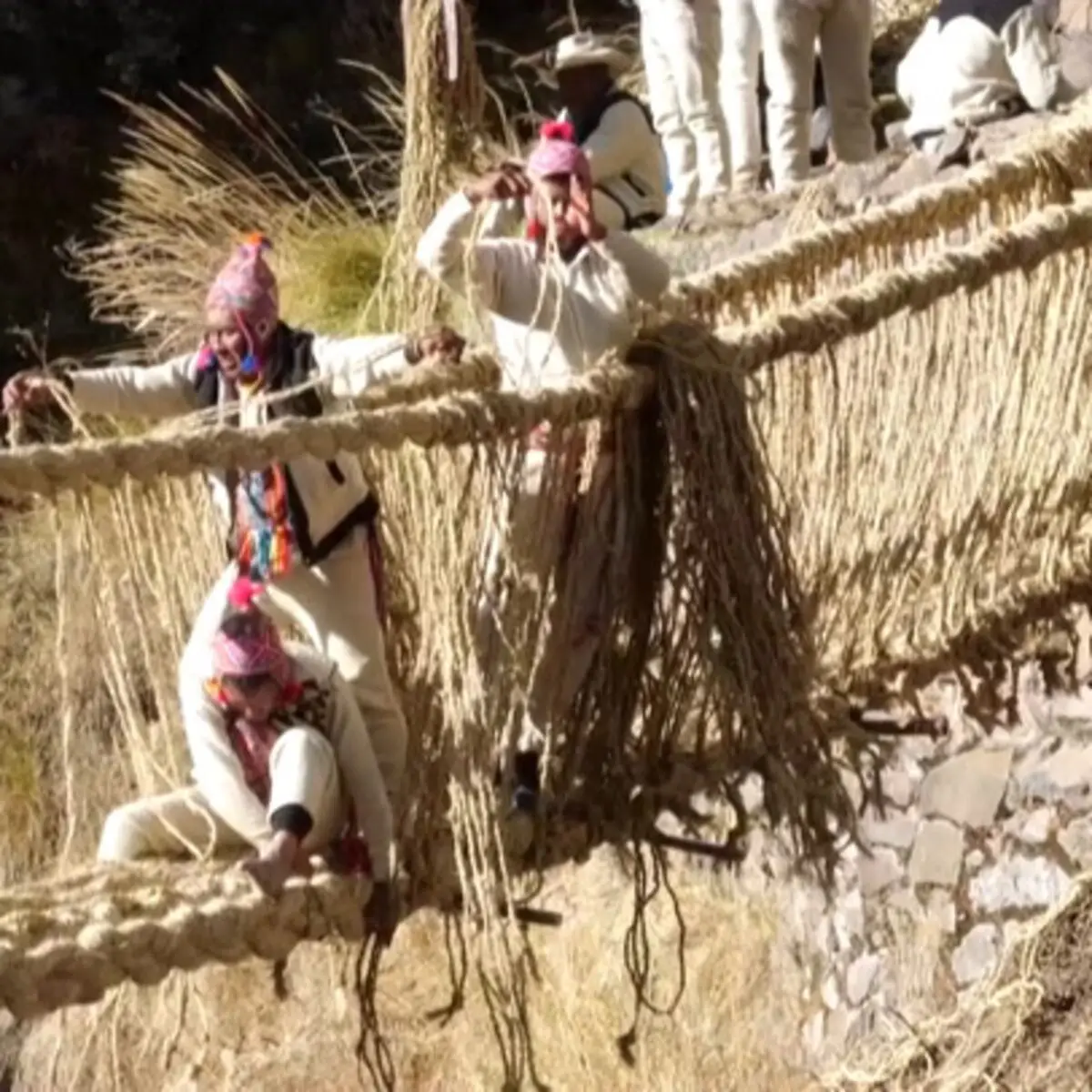
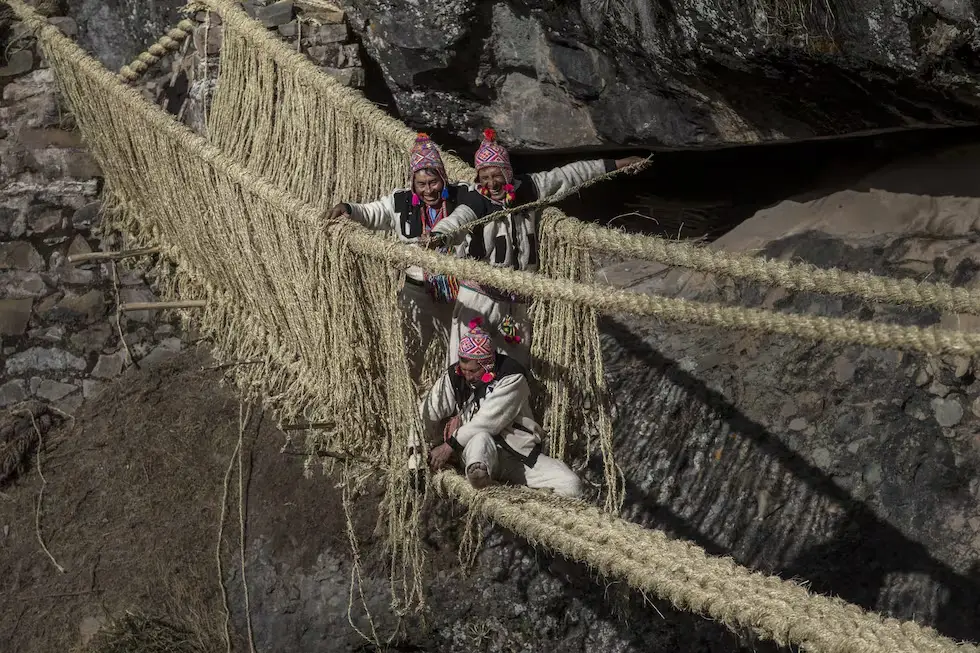
The Andean tradition in Cusco remains present in many celebrations and community practices. However, few expressions maintain such a high level of collective participation as the Q’eswachaka Inca Bridge. The annual reconstruction involves traditional ceremonies, communal labor, and the transmission of ancestral knowledge. In addition, families work together for several days to complete the structure. The process begins with collecting ichu grass in the high Andean regions. Later, the fibers are moistened and manually braided by the women of the communities. The men perform the main assembly over the Apurímac canyon. Therefore, each participant fulfills a specific role within the activity. The ceremonies also include traditional offerings and expressions of gratitude toward nature and sacred mountains. Because of these cultural practices, the bridge maintains deep spiritual significance for the Quechua communities. Visitors can observe part of these activities during certain times of the year.
Inca Suspension Bridge in Cusco and Structural Characteristics
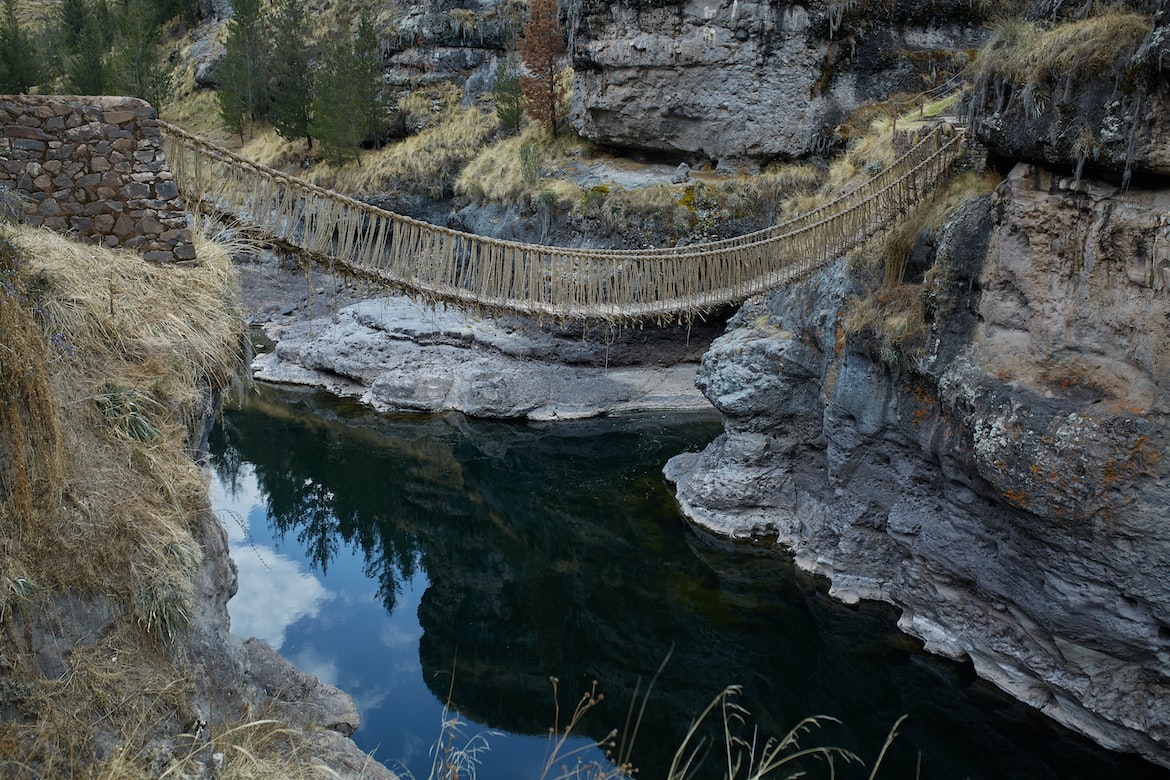
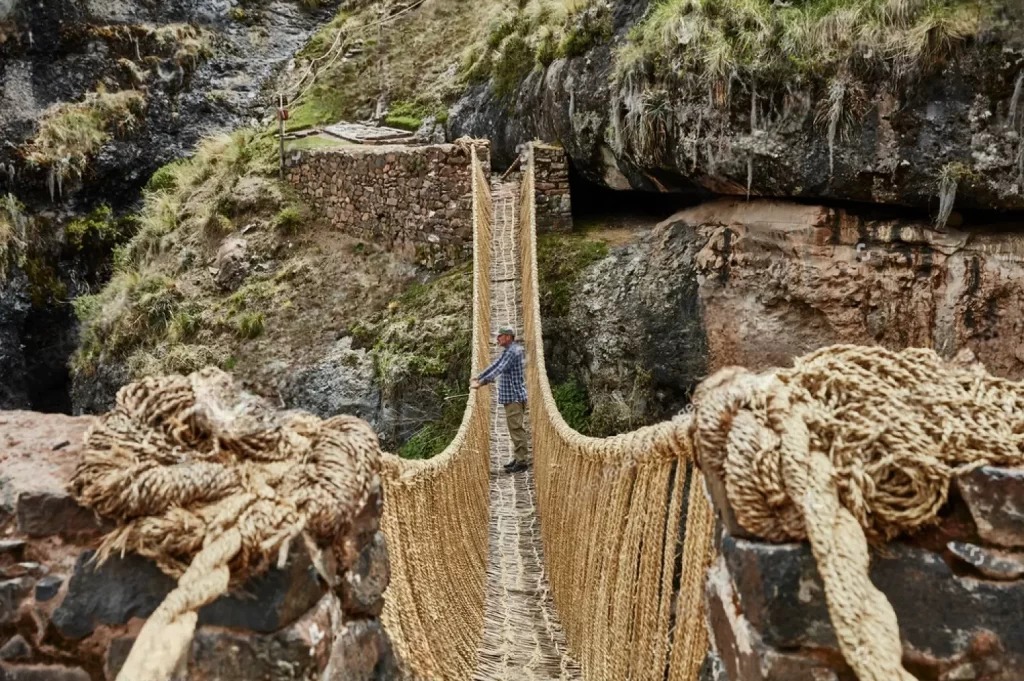
The Q’eswachaka Inca Bridge stands out as the most important Inca suspension bridge in Cusco that remains operational today. The structure crosses the deep canyon of the Apurímac River, located in the province of Canas. In addition, the surroundings feature landscapes typical of southern Peru’s highlands. The bridge is supported by large ropes made from braided plant fibers. These ropes serve as the primary foundation supporting the weight of visitors. The floor is also composed of branches and plant-fiber ropes carefully secured together. Despite its simple appearance, the structure is remarkably strong. Therefore, it can support the daily passage of visitors and local residents. The design demonstrates the advanced engineering knowledge developed by the Incas. In addition, the flexibility of the bridge allows it to withstand movement caused by wind and regular use. The Q’eswachaka Inca Bridge continues to be a living example of ancestral technology adapted to the mountainous Andean environment.
Inca Rope Bridge and Traditional Materials
The traditional Inca rope bridge uses completely natural materials obtained from the Andean mountains. Ichu grass serves as the primary element used to manufacture the bridge ropes. This plant grows in high-altitude Andean regions and possesses great durability. In addition, the fibers can withstand extreme weather conditions. The communities collect large quantities of ichu before reconstruction begins. Afterwards, the fibers are manually braided until they form thicker ropes. This work requires coordination and community experience. Therefore, every stage of the process preserves techniques inherited from ancient times. The Q’eswachaka Inca Bridge must be renewed annually due to the natural wear of its materials. However, that renewal forms an essential part of the cultural tradition. In addition, it helps preserve the ancestral knowledge associated with the construction of suspension bridges. The combination of nature and human effort reflects the close Andean relationship with the environment.
Reconstruction of the Q’eswachaka Bridge and Cultural Heritage
The reconstruction of the Q’eswachaka Bridge takes place every year during the month of June. This process lasts approximately four days and brings together hundreds of community members. In addition, it represents one of the most important cultural ceremonies in the region. The old bridge is completely dismantled before the new construction begins. Afterwards, the new ropes are carefully installed across the Apurímac canyon. Community specialists coordinate every stage using traditional techniques. Therefore, the bridge becomes ready for everyday use once the collective work is completed. Recognition as UNESCO Intangible Cultural Heritage strengthened the preservation of this ancestral tradition. In addition, it increased international interest in Andean cultural practices. The Q’eswachaka Inca Bridge also contributes to strengthening local cultural identity. Because of this, many communities consider the activity an important collective responsibility. The event attracts visitors interested in culture, history, and community-based tourism.
Quechua Communities of Q’eswachaka and Cultural Preservation
The Quechua communities of Q’eswachaka play an essential role in preserving this ancestral tradition. Community participation guarantees the continuity of knowledge transmitted for centuries. In addition, families teach construction techniques from an early age. Children observe and gradually participate in different bridge-related activities. Therefore, learning occurs naturally within community life. The Quechua language also remains present during ceremonies and collective work. In addition, community authorities organize every detail of the annual process. The Q’eswachaka Inca Bridge represents much more than a tourist attraction for local residents. The structure symbolizes unity, cooperation, and respect for inherited customs. Because of this cultural significance, the communities carefully protect the traditional practices associated with the bridge. Visitors can directly experience part of these cultural expressions through responsible tourism activities.
Getting to Q’eswachaka from Cusco and Transportation Options
Many people search for information about how to get to Q’eswachaka from the city of Cusco. The bridge is located approximately four hours by road from Cusco’s historic center. In addition, the route passes through rural landscapes and small Andean communities. The most common route crosses the provinces of Quispicanchi and Canas. Travelers can hire private transportation, organized tours, or shared tourist services. Therefore, different options are available depending on budget and travel preferences. The journey includes paved roads and some unpaved sections near the destination. In addition, many excursions include stops at scenic viewpoints and Andean lakes. The Q’eswachaka Inca Bridge is commonly visited during full-day excursions. However, some travelers prefer combining the experience with nearby cultural routes. It is recommended to depart early from Cusco to make the most of the day. Visitors should also bring warm clothing due to the low temperatures in the area.
Q’eswachaka Bridge Tours and the Andean Cultural Experience in Peru
The Q’eswachaka Bridge tours provide an opportunity to discover an important expression of the Andean cultural experience in Peru. Many agencies include transportation, a tour guide, and visits to nearby attractions. In addition, some itineraries include stops at the lakes of Pampamarca, Asnaqocha, Acopia, and Pomacanchi. These landscapes complement the cultural experience with beautiful Andean scenery. Therefore, the route is attractive for travelers interested in both history and nature. The Q’eswachaka Inca Bridge is also part of several community tourism circuits. Some programs allow direct interaction with local residents. In addition, visitors can learn about traditional techniques related to the bridge. Many agencies organize special trips during the annual reconstruction period. Because of this, tourists can witness ceremonies and collective work unique to Peru. Choosing responsible operators that respect local customs and the natural environment is highly recommended.
Cultural Tourism in Cusco and Nearby Attractions
Cultural tourism in Cusco offers experiences related to history, archaeology, and living traditions. The Q’eswachaka Inca Bridge stands out because it combines all these elements in a single destination. In addition, the surrounding area includes various natural and cultural attractions. Many excursions visit the famous lakes of Cusco’s southern circuit. There are also small rural communities where ancient Andean customs remain alive. Therefore, the journey allows visitors to experience authentic aspects of local life. Some travelers combine the visit with lesser-known archaeological destinations outside the traditional tourist route. In addition, the scenery of the Apurímac canyon provides excellent photography opportunities. The Q’eswachaka Inca Bridge often attracts visitors seeking experiences different from Machu Picchu. Because of this, the site maintains a calmer atmosphere with fewer crowds. The experience allows travelers to better understand the cultural continuity that still exists in the Peruvian Andes.
Tourist Attractions Near Q’eswachaka and Complementary Routes
The main tourist attractions near Q’eswachaka include high-altitude lakes and traditional communities. Many excursions visit the lakes of Pomacanchi, Acopia, Asnaqocha, and Pampamarca during the journey. In addition, these areas feature important natural landscapes of the Cusco highlands. Some visitors also stop at viewpoints overlooking the Apurímac valley. Therefore, the route offers several opportunities to enjoy rural Andean scenery. The Q’eswachaka Inca Bridge can be combined with cultural routes leading to traditional villages in southern Cusco. Some agencies also organize gastronomic experiences featuring traditional Andean cuisine. In addition, visitors can learn about agricultural activities carried out by local communities. These complementary experiences help travelers better understand daily life in the Andes. Because of this, many consider the excursion a complete cultural experience within Peru.
Importance of Peru’s Last Inca Bridge Today
The last Inca bridge in Peru continues to hold enormous cultural importance within contemporary Andean heritage. The Q’eswachaka Inca Bridge functions as much more than a regional tourist attraction. In addition, it represents a direct connection between the present and the ancient practices of the Inca world. The communities continue using traditional knowledge without completely replacing ancestral methods. Therefore, the bridge maintains cultural authenticity in a modern context. International recognition has also helped strengthen efforts to preserve this living tradition. In addition, cultural institutions support projects related to preservation and responsible tourism. The Q’eswachaka Inca Bridge demonstrates that many Andean customs remain alive today. Because of this, the site has become a symbol of cultural identity for several communities in Cusco. The visitor experience highlights the historical importance of collective cooperation and ancestral knowledge in the Peruvian Andes.
Frequently Asked Questions
1. What is the best time to visit the Q’eswachaka Inca Bridge?
The best season generally extends from May to September because of the dry weather in the Cusco region. During these months, roads are usually in better condition for tourism. In addition, the landscapes feature clearer skies and more stable temperatures. However, June is particularly interesting because it coincides with the annual bridge reconstruction. Many travelers prefer these dates to witness traditional community activities.
2. Is it safe to cross the Q’eswachaka Inca Bridge?
The bridge receives annual maintenance through traditional techniques used by local communities. In addition, the ropes are completely replaced during reconstruction. Visitors may cross the bridge by following basic safety instructions. However, some people feel nervous because of the natural movement of the structure. It is recommended to walk slowly and follow guidance provided by local guides.
3. How long does a Q’eswachaka Inca Bridge excursion take?
Most excursions from Cusco last approximately one full day. The road journey usually takes several hours for both outbound and return travel. In addition, many tours include stops at Andean lakes and scenic viewpoints. Some agencies also offer complementary cultural activities during the experience. Therefore, the excursion generally occupies most of the day.
4. Is acclimatization necessary before visiting Q’eswachaka?
The bridge is located in a high-altitude area within the Peruvian Andes. Therefore, many visitors experience mild altitude-related effects. It is recommended to spend at least one or two days in Cusco before the excursion. In addition, maintaining proper hydration can help during the trip. Travelers sensitive to altitude should walk slowly and avoid unnecessary physical exertion.
5. Are there tourist services near the Q’eswachaka Bridge?
The area offers basic tourist services mainly organized by operators from Cusco. Some communities also provide handicrafts and traditional foods during certain seasons. However, tourism infrastructure remains limited compared to other popular destinations in Peru. Therefore, visitors should bring personal items needed for the excursion. Many agencies include meals and transportation within their tour packages.
Discover our Peru travel packages and let us organize the perfect adventure for you. Request your quote for your trip to Cusco today!