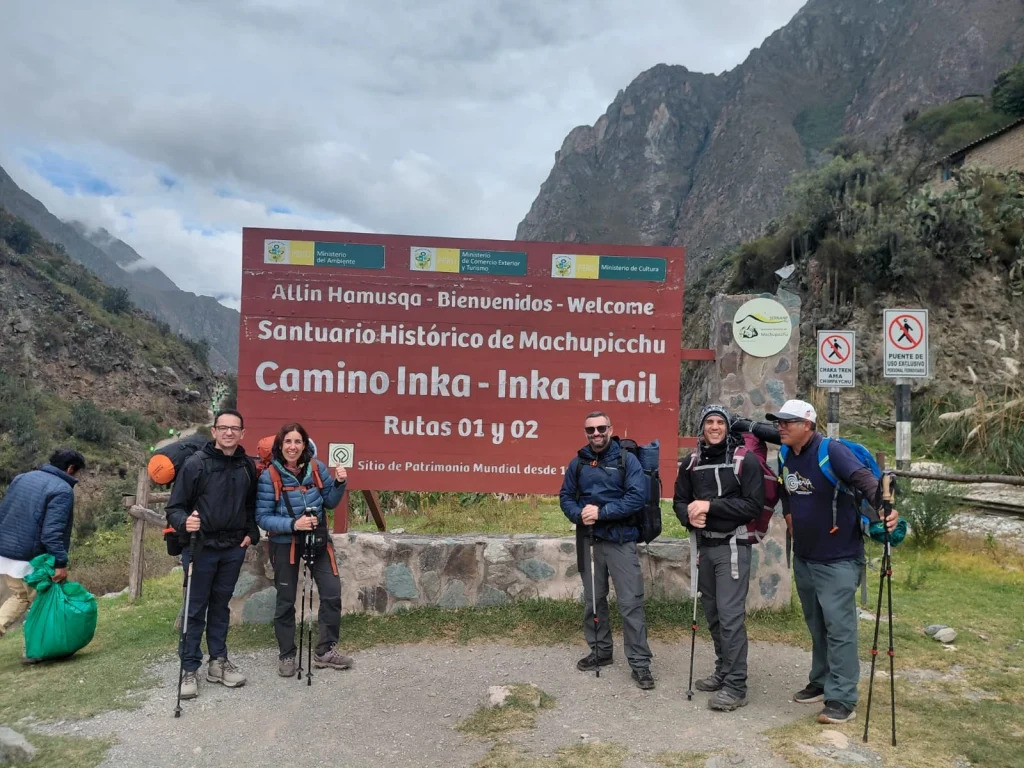
A very enriching experience, full of history and good coordination even with changing weather during the route.
See moreHidden Salkantay & Inca Trail Journey – 6 Days
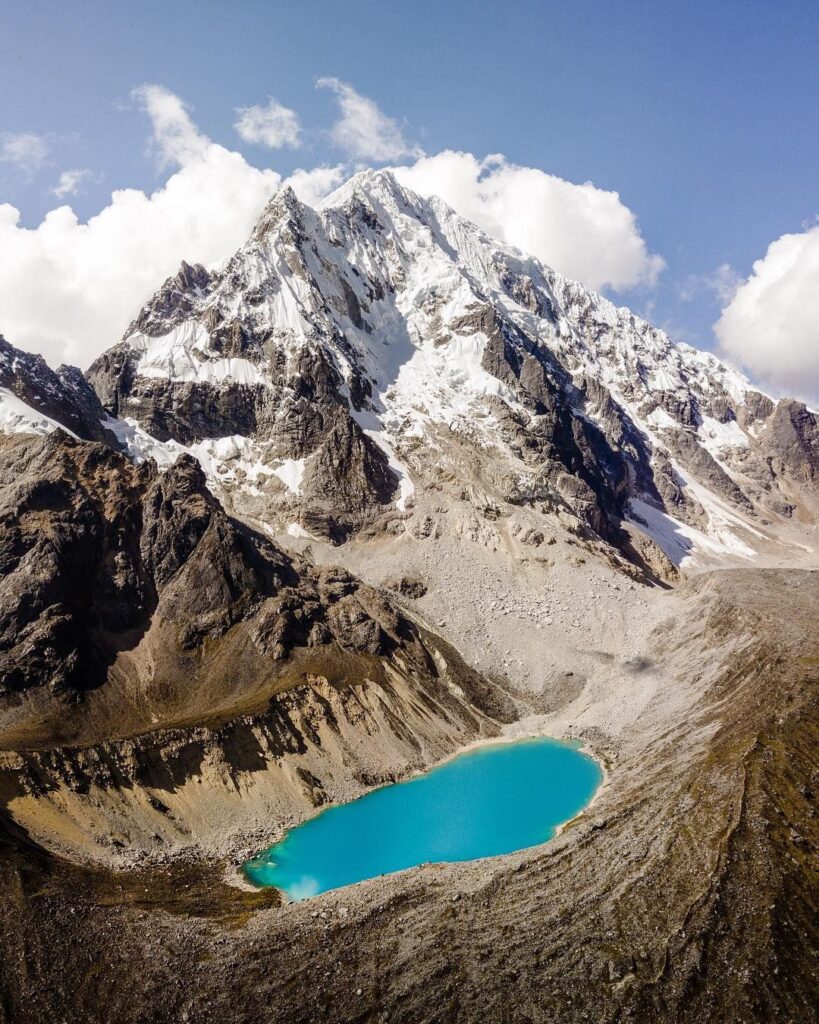
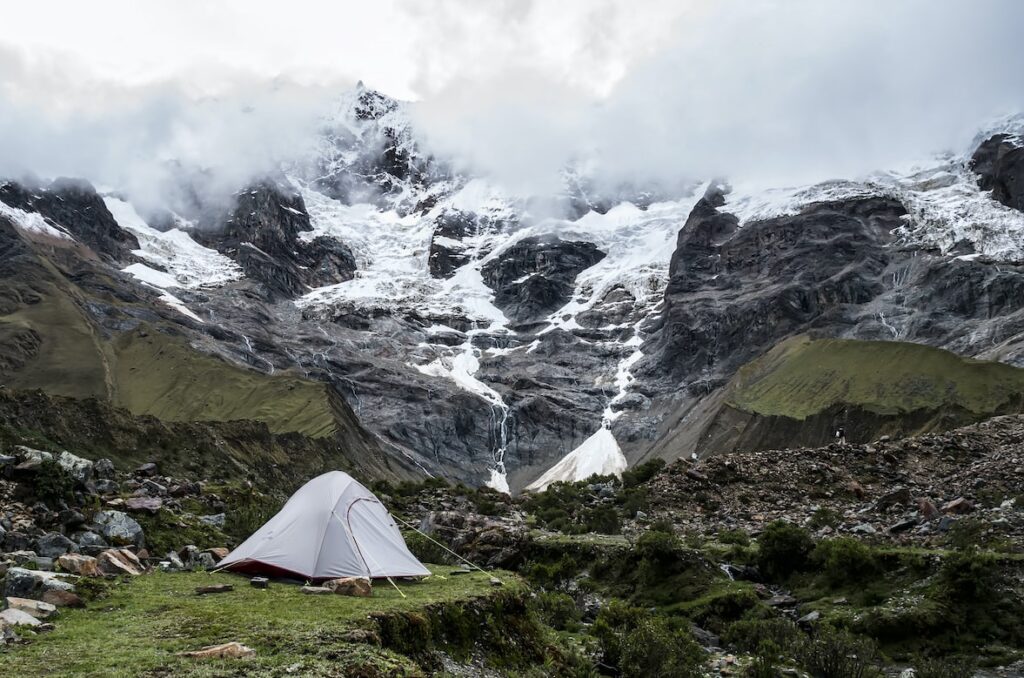
This trek offers an incredible combination of mountains, forests, and Inca ruins on the road to Machu Picchu. Experience breathtaking beauty and immense variety, from icy glaciers to steaming tropical forests. Beyond the vestiges of ancient Inca culture, you’ll witness daily life in the mountains, on traditional farmsteads, and in tiny hamlets. The first two days of this exhilarating hike are the most challenging, as you trek around the skirts of the majestic ice-capped Mount Salkantay (6271m/20568ft). We’ll cross a high pass to continue on a backcountry trail, rocky in places, until we join the famed Inca Trail for the final days of our adventure.
Highlights
- Machu Picchu
- Mount Salkantay
- Inca Trail
- Cusco
- Limatambo
- Mollepata
Itinerary
Day 01: Journey to Salkantaypampa
Cusco to Salkantaypampa Trek
1
Your adventure begins with an early 5:00 AM pickup from your Cusco hotel, followed by a 4-hour private transfer to Cruzpata. Along the way, we’ll pass through the town of Limatambo (2100m/6888ft) and drive along the right bank of the Apurimac River, reaching Mollepata (2800m/9184ft), before continuing to Cruzpata (3100m/10168ft). Here, you’ll meet our horsemen and their horses, marking the starting point of our trek. We begin our ascent on foot towards Soraypampa, following a climbing trail with varied terrain. We’ll encounter small groups of houses, diverse flora, and wild birds. Our day concludes at our campsite in Salkantaypampa (3895m/12776ft), offering magnificent views of the majestic snow-capped Mount Salkantay (6271m/20569ft).
Day itinerary details
Day 02: Challenging Climb to Incachiriasca Pass
Summiting Incachiriasca Pass
1
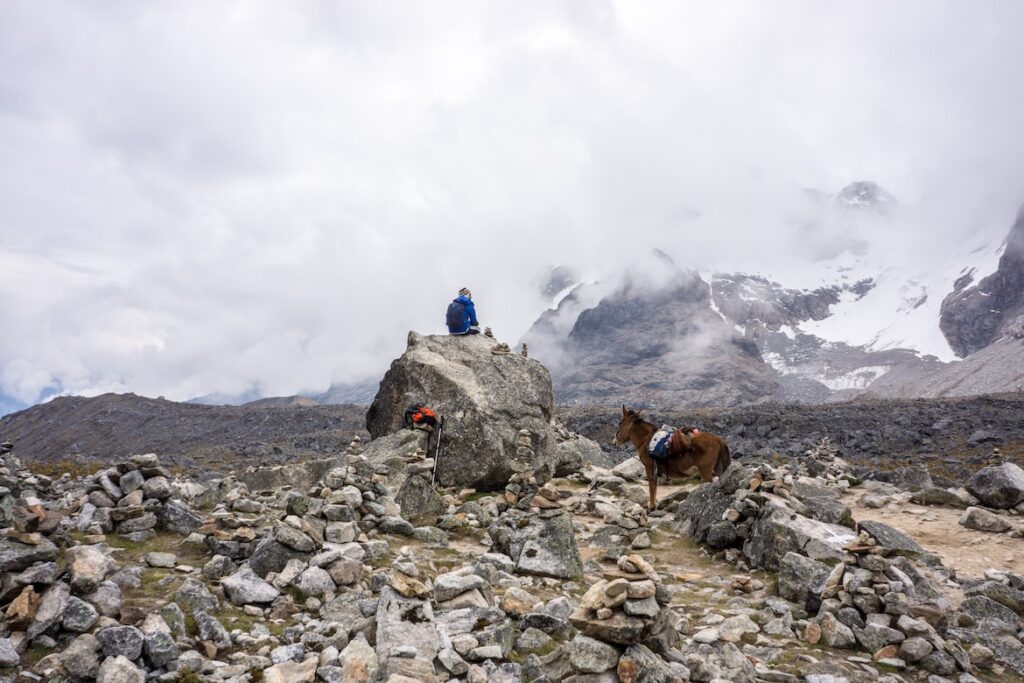
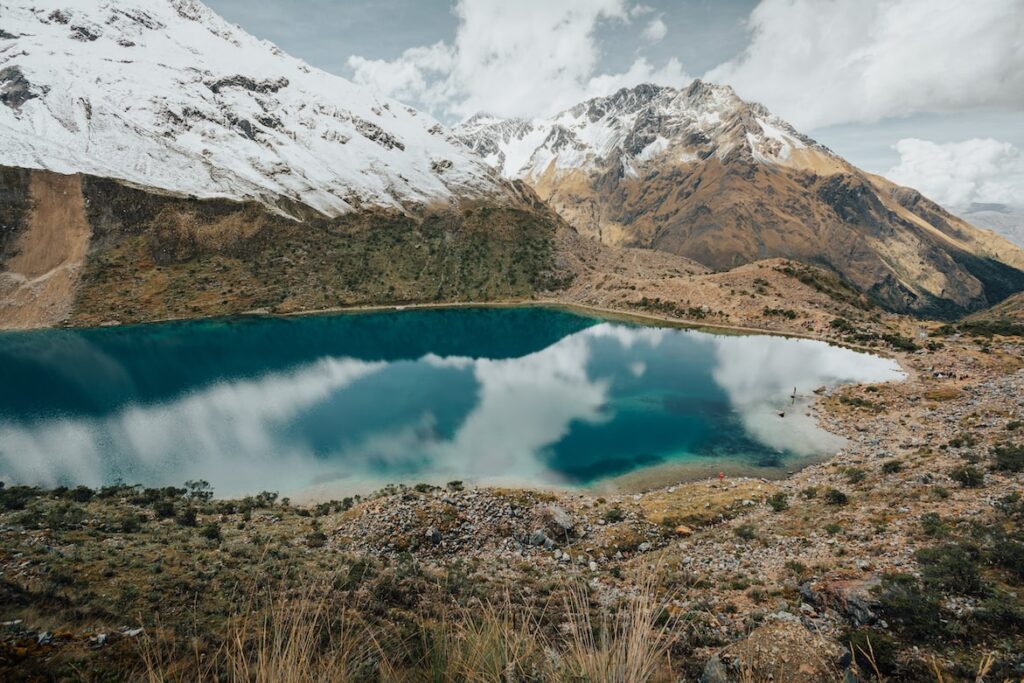
After breakfast, we embark on a challenging four-hour steep climb towards the Incachiriasca Pass (4850m/15908ft), the highest point of our entire trek. This pass offers breathtaking panoramic views of the imposing Salkantay snow peak. We then descend to our lunch spot at Sisaypampa, a flat area from which one can often observe condors soaring overhead and enjoy views of Salkantay‘s neighboring valleys. Following lunch, we continue our trek to the Pampacahuana community, situated beside an original Inca canal, where we’ll set up our second camp for the night.
Day itinerary details
Day 03: Joining the Inca Trail
Wayllabamba and Inca Trail Connection
1
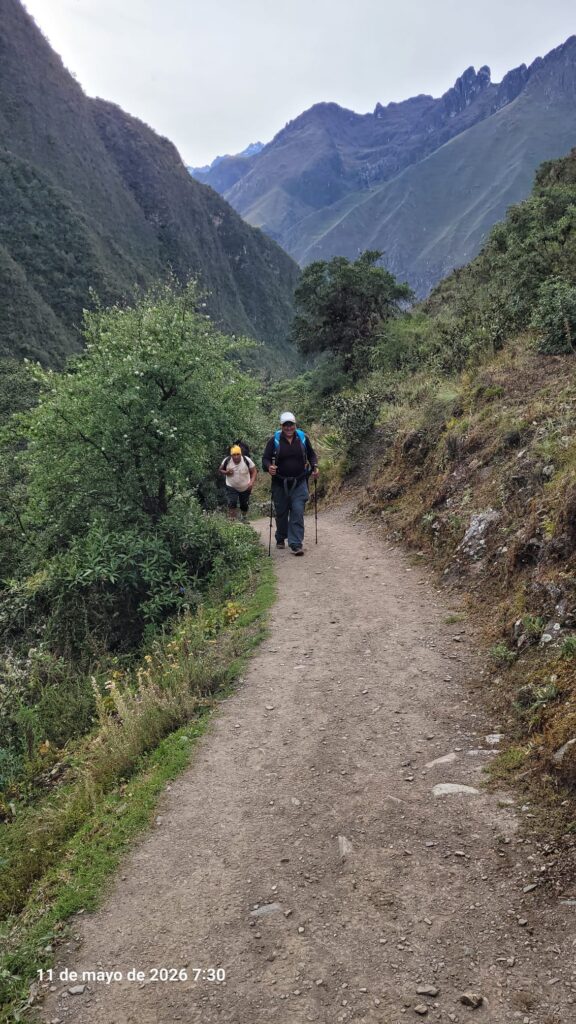
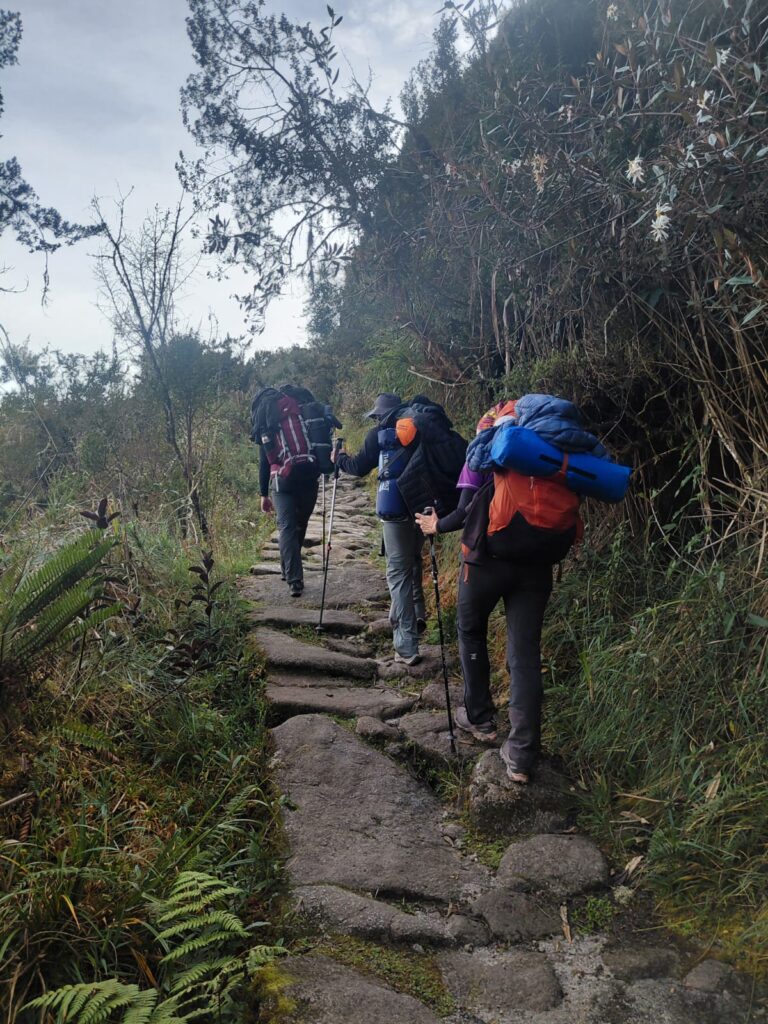
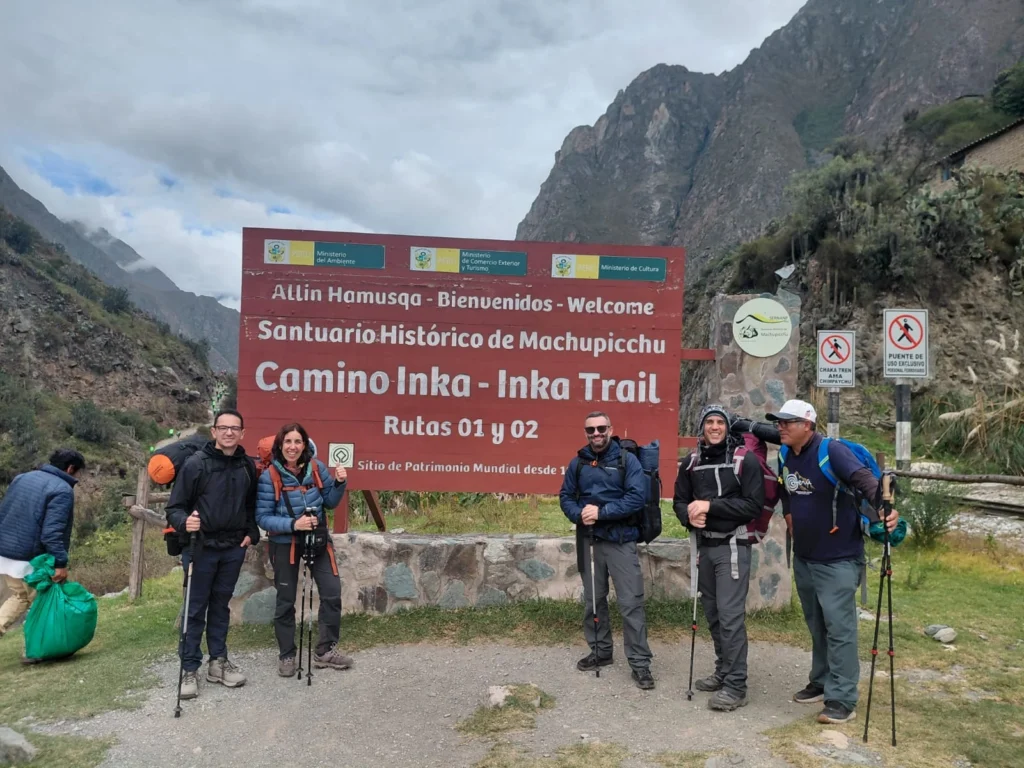
Today, we enjoy a downhill walk along the banks of the Pampacahuana River, following its course towards Wayllabamba (3000m/9840ft). En route, we’ll visit the fascinating Incaracay archaeological complex. After approximately 4 hours, we arrive in Wayllabamba, our lunch stop. This significant point marks where our trek officially joins the renowned Inca Trail. Since pack animals are not permitted on the Inca Trail, we bid farewell to our horsemen and are introduced to our dedicated group of porters. We then depart Wayllabamba, continuing our ascent to Llulluchapampa (3850m/12628ft), where we’ll establish our camp for the night. During the climb, observe the dramatic landscape transformation from the sierra (highlands) to the puna (Andean grasslands), with opportunities to spot domesticated llamas and alpacas grazing on ichu grass.
Day itinerary details
Day 04: Crossing Dead Woman's Pass and Inca Sites
Warmihuañusca Pass and Sayacmarca
1
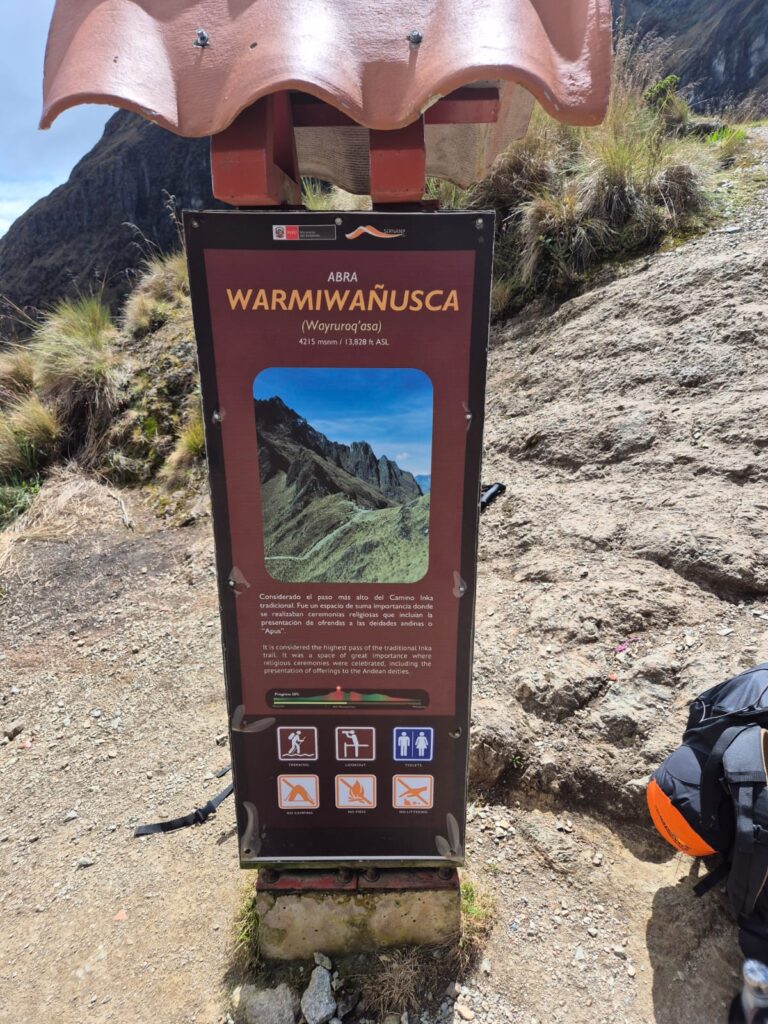
Following breakfast, we begin our two-hour ascent to the highest point of the Inca Trail, the mountain pass of Abra Warmihuañusca (4200m/13776ft), famously known as ‘Dead Woman’s Pass.’ Immediately after the pass, we descend into the picturesque Pacaymayo Valley (3600m/11808ft), from which we then climb to the second pass, Abra Runkurakay (3970m/13022ft). Halfway up, we pause to explore the archaeological complex of Runkurakay itself, located at 3800m/12464ft, an oval structure believed to have served as a watchtower. After crossing the pass, we descend towards Yanacocha and enter the enchanting cloud forest, finally arriving at Sayacmarca (3624m/11887ft). This impressive complex features a semicircular construction, enclosures at different levels, narrow streets, liturgical fountains, patios, and irrigation canals. Just 20 minutes further, we reach Chaquicocha, where we’ll set our camp.
Day itinerary details
Day 05: Through the Clouds to Wiñaywayna
Phuyupatamarca and Wiñaywayna
1
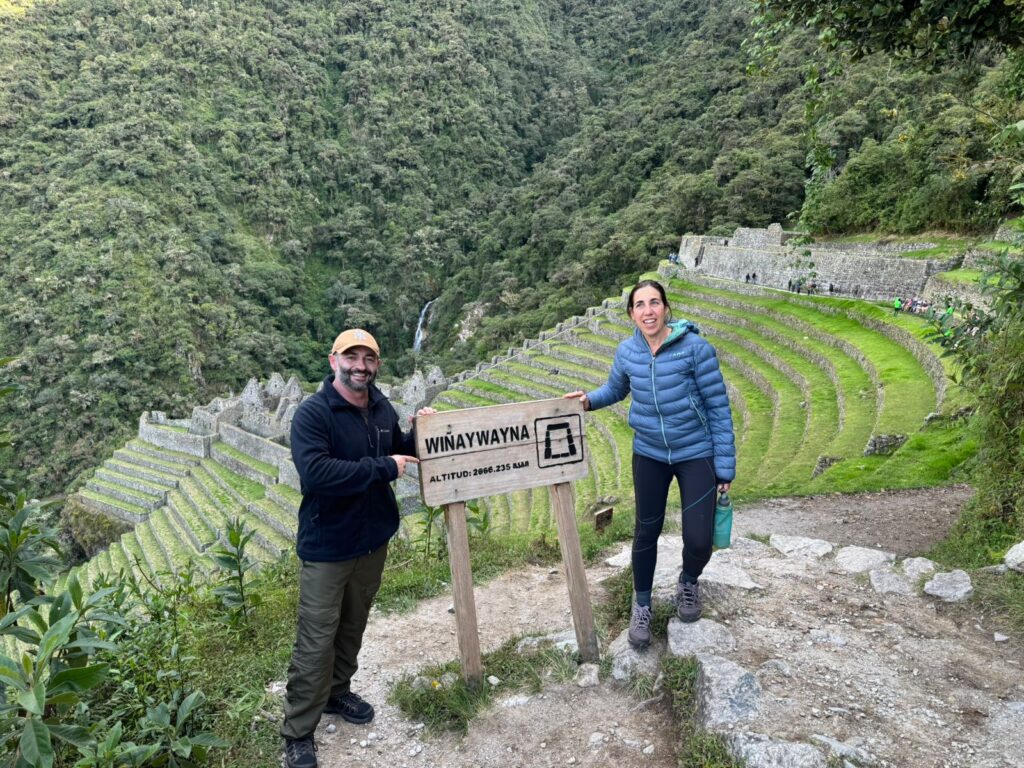
After breakfast, we continue with an easy climb to reach the third pass, Phuyupatamarca (3700m/12136ft). Along this ascent, you’ll marvel at the ingenuity of ancient Inca engineering, walking along paths semi-detached from the mountain and observing perfectly ordered stones filling ravines, preserving the trail despite the multi-layered Andean geography. We’ll pass through an Inca tunnel before reaching the aforementioned pass and descending to the complex of the same name. Phuyupatamarca, meaning ‘town over the clouds,’ offers sophisticated sacred water fountains with solid foundations and impressive vistas of the Urubamba River Valley. We’ll follow the long descending stone steps to reach Wiñaywayna (2650m/8692ft), where we’ll spend our final night camping.
Day itinerary details
Day 06: Sunrise at Machu Picchu and Return to Cusco
Machu Picchu Sunrise and Guided Tour
1
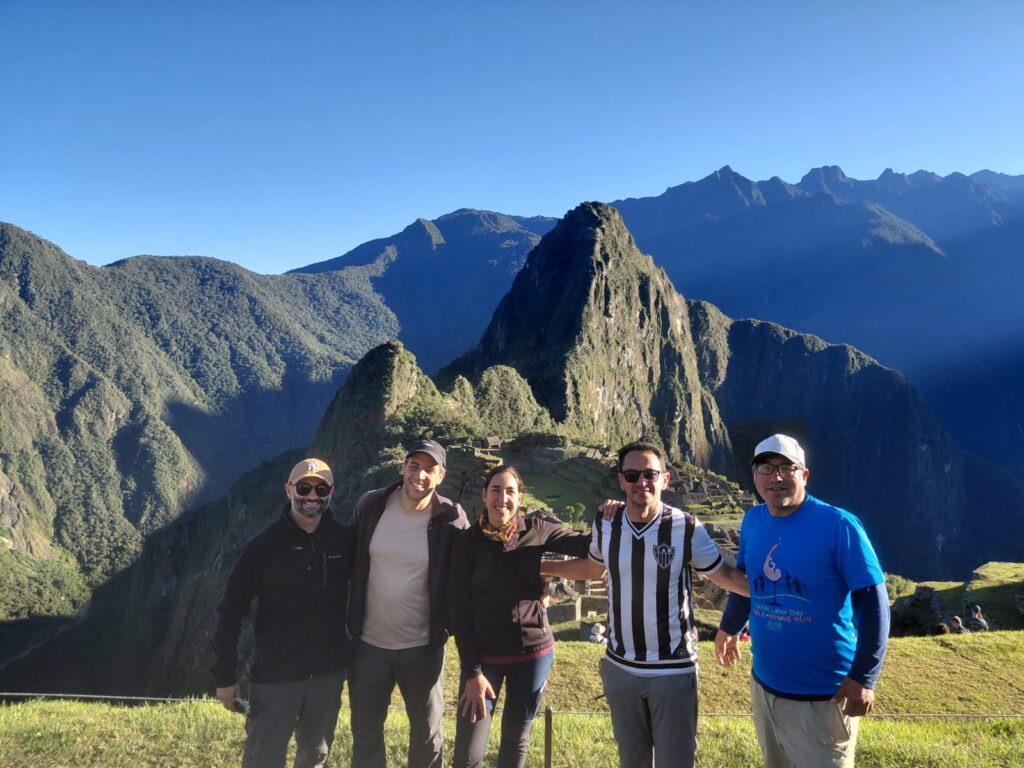
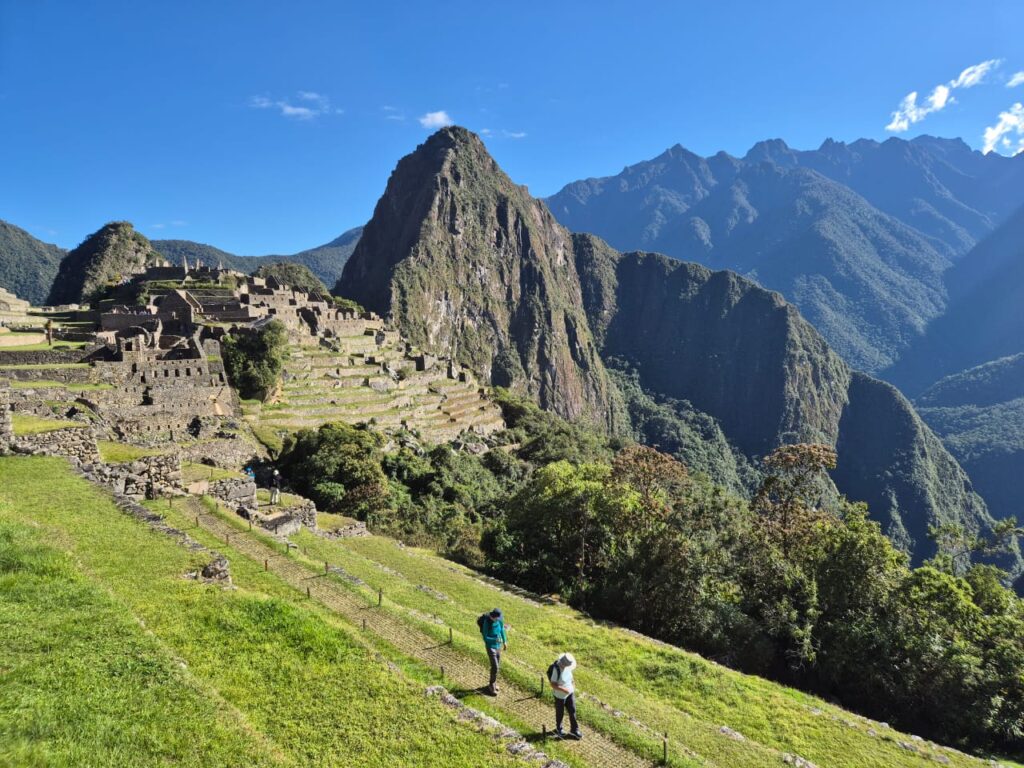
Today is the culmination of our trek! We wake up very early, at 4:00 AM, and an hour later begin our climb to Inti Punku, the Sun Gate (2,400 m / 7,872 ft). From this spectacular vantage point, we may witness a breathtaking sunrise over the sacred citadel of Machu Picchu. We then descend into Machu Picchu, entering the citadel from its highest point through the “House of the Guardians” about 40 minutes later. After descending to the control point to register and leave our backpacks, we immediately begin a comprehensive guided tour of the Inca citadel, which will last approximately two hours. Afterward, you’ll have free time to explore on your own, perhaps climbing Wayna Picchu Mountain (permits permitting) for spectacular views of Machu Picchu and the surrounding valleys, or visiting the Temple of the Moon or the impressive Inca Bridge. In the afternoon, we’ll meet in the town of Aguas Calientes to take the train back to Poroy Train Station, where a transfer will be waiting to take you back to your Cusco hotel.
Day itinerary details
Inca Trail permits are strictly regulated, personalized, and must be secured months in advance. A valid passport is essential for this trek and must match the passport used for booking and permit acquisition.
Recommendations
Before Booking
- Verify your physical condition and consult with your doctor, especially considering the high altitudes and demanding nature of the trek.
- Book well in advance, as Inca Trail permits are limited and sell out quickly, often months in advance.
- Research altitude sickness prevention and remedies; discuss any concerns with your healthcare provider.
- Confirm all dietary restrictions or special needs with the tour operator during the booking process.
Before Traveling
- Ensure you have a valid passport; it's strictly required for the Inca Trail and Machu Picchu entrance, and it must match the one used for booking.
- Pack appropriate clothing layers for varied climates, including warm gear, rain protection (jacket and pants), and sturdy, broken-in hiking boots.
- Consider purchasing comprehensive travel insurance that covers trekking, high altitudes, and potential medical emergencies.
- Acclimatize to the altitude in Cusco for at least 2-3 days before starting the trek to minimize the risk of altitude sickness.
Included services
What is included
- Private transportation from your Cusco hotel to Cruzpata (Day 1).
- Professional bilingual guide (English/Spanish) for the entire trek and Machu Picchu tour.
- Horsemen and horses for carrying personal luggage (up to a specified weight) on the Salkantay portion (Days 1-2).
- Porters for carrying personal luggage (up to a specified weight) on the Inca Trail portion (Days 3-5).
- High-quality camping equipment (tents for 2 people, sleeping mattresses, dining tent, kitchen tent, toilet tent).
- Meals as specified in the itinerary (5 breakfasts, 5 lunches, 5 dinners) prepared by a professional cook.
- First-aid kit and oxygen bottle for emergencies.
- Train ticket from Aguas Calientes to Poroy Train Station (Expedition service or similar).
- Transfer from Poroy Train Station back to your Cusco hotel.
- Entrance fees for the Salkantay trek and Inca Trail.
- Entrance fee to Machu Picchu Citadel.
What is not included
- International or domestic flights to/from Cusco.
- Sleeping bags (can be rented from the operator; please inquire in advance).
- Breakfast on Day 1, lunch and dinner on Day 6.
- Entrance fee to Wayna Picchu or Machu Picchu Mountain (requires separate booking and permit, often months in advance).
- Travel insurance (highly recommended).
- Personal expenses (e.g., snacks, alcoholic beverages, souvenirs, extra water).
- Tips for guides, porters, and cooks (customary in Peru).
- Hiking poles (can be rented from the operator).
Frequently Asked Questions
01 What is the luggage allowance for the trek, and what do porters carry?
For the Salkantay portion of the trek (Days 1-2), horses will carry your main luggage. Once you join the Inca Trail (Days 3-5), porters will carry your belongings. Typically, there is a weight limit of 5-7 kg (11-15 lbs) per person for porters, which usually includes your sleeping bag and personal items that you won’t need during the day. You will carry a small daypack with essentials like water, snacks, camera, and rain gear.
02 Is it possible to rent equipment like sleeping bags or hiking poles?
Yes, if you don’t have your own, you can typically rent high-quality sleeping bags (rated for appropriate temperatures) and hiking poles directly from the tour operator. It’s highly recommended to arrange these rentals in advance when booking your trek to ensure availability.
03 What should I do to prevent altitude sickness during the trek?
To minimize the risk of altitude sickness, it’s strongly recommended to spend at least 2-3 days in Cusco (3,400m / 11,155ft) before starting the trek to acclimatize. During the trek, stay well-hydrated by drinking plenty of water, avoid alcohol and heavy meals, and walk at a slow, steady pace. Your guide is trained in first aid and carries an oxygen bottle for emergencies.
04 What are the sanitary facilities like during the camping portions of the trek?
During the camping nights, basic but private toilet tents will be set up by the trekking crew at each campsite. These are kept as clean as possible. While running water for showers is generally not available on the trail, some campsites may offer cold bucket showers for a small fee. It’s advisable to bring your own toilet paper, wet wipes, and hand sanitizer.
05 What kind of weather can I expect, and what is the best time of year for this trek?
The weather in the Andes can be highly unpredictable, with significant variations between day and night, and across different altitudes. Expect cold temperatures at night, especially at higher elevations, and warm, sunny days. Rain is possible at any time of year. The best time to undertake this trek is during the dry season, from May to October, when the skies are generally clearer and there’s less rainfall, though conditions can still vary.
Traveler Experiences
Hear from travelers who experienced the magic of our tours
Recent comments