
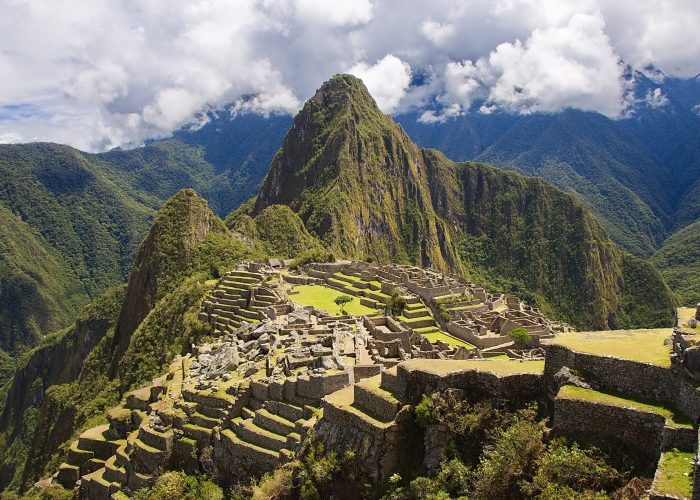
The Ausangate Trek is one of the most remarkable hiking experiences in southern Peru. This route crosses some of the most impressive high-mountain landscapes in the Cusco region. In addition, it allows travelers to discover Andean communities, glacial lakes, and ecosystems of great natural importance. The Ausangate Trek takes place around the majestic Ausangate Mountain, considered a sacred mountain within the Andean worldview. Therefore, travelers looking for an alternative to more crowded routes often find this trek an excellent option. However, before starting the Ausangate Trek, it is essential to understand aspects related to altitude, duration, weather conditions, and the physical preparation required. Proper planning allows travelers to enjoy the journey more fully and safely face the challenges typical of a high-altitude mountain route.
Ausangate Mountain in Cusco and Its Importance Within the Andes
The Ausangate Mountain in Cusco rises more than 6,300 meters above sea level and is one of the highest peaks in southern Peru. In addition, it is located in the province of Quispicanchi, southeast of the city of Cusco. Since pre-Hispanic times, this mountain has held an important place in the beliefs of local communities. For this reason, many residents consider it an Apu, meaning a protective mountain associated with Andean spirituality.
The natural surroundings of Ausangate feature glaciers, lakes, wetlands, and extensive grazing lands used by highland communities. Likewise, the region preserves cultural traditions that form part of the identity of Andean peoples. These characteristics make the Ausangate Trek an experience that combines nature, culture, and adventure. In addition, the relative isolation of the area allows visitors to enjoy landscapes less affected by mass tourism. As a result, many travelers consider this route one of the best alternatives for discovering the geographic diversity of the Peruvian Andes.
Multi-Day Ausangate Route and Trek Duration
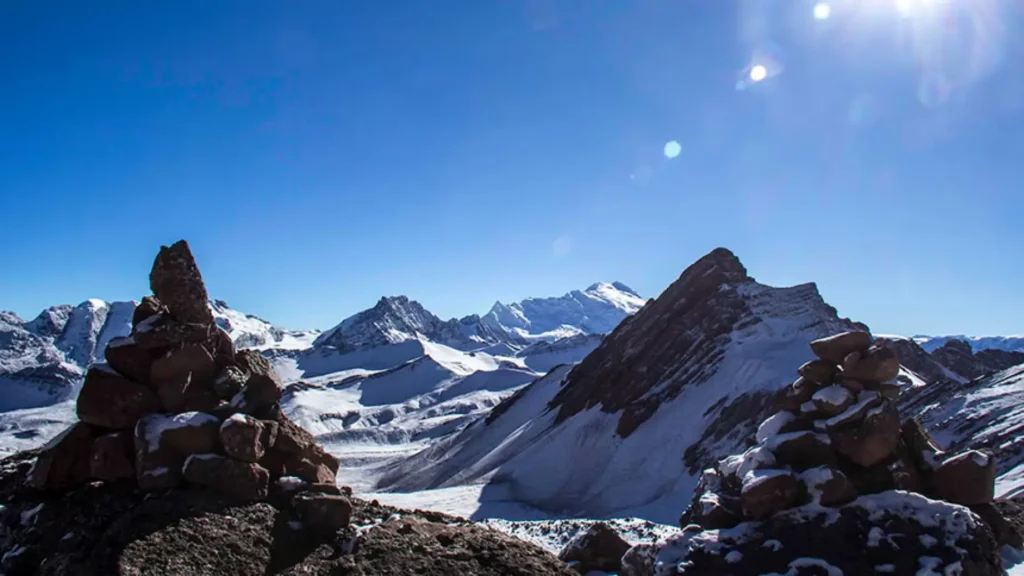
The multi-day Ausangate route usually takes between four and six days, depending on the selected itinerary and the attractions included in the journey. In addition, some programs incorporate visits to nearby destinations, which can extend the overall duration of the experience.
Circuit Around Ausangate
The traditional circuit around Ausangate encircles much of the mountain massif and crosses several high-altitude passes. During the hike, trekkers follow trails connecting small rural communities, grazing areas, and glacial lakes. In addition, each day offers different views of the snow-capped mountain and the surrounding landscapes.
The distribution of the stages allows travelers to progress gradually across terrain of varying difficulty. However, the high elevations make it necessary to maintain a suitable pace. Therefore, many operators recommend proper acclimatization in Cusco before beginning the trek. This preparation contributes significantly to the success of the Ausangate Trek and reduces risks associated with altitude sickness.
Distances and Daily Hiking Stages
The distances covered each day may vary depending on the selected program. Generally, daily hikes range between ten and twenty kilometers. In addition, terrain conditions and altitude directly influence the time required to complete each stage. For this reason, it is important to follow the guides’ instructions and respect the scheduled rest periods.
Difficulty of the Ausangate Hike and Preparation for High-Altitude Trekking
The difficulty of the Ausangate hike is one of the most important aspects travelers should consider before starting the adventure. Although the route does not require technical mountaineering skills, it does demand good physical fitness and the ability to adapt to high altitudes.
Preparation for High-Altitude Trekking
Proper preparation for high-altitude trekking should begin several weeks before the trip. Cardiovascular activities, long walks, and exercises designed to improve endurance are highly recommended. In addition, strengthening the legs and back is helpful for handling the elevation changes characteristic of the route.
Another fundamental aspect is acclimatization. Most trekkers spend at least two or three days in Cusco before starting the Ausangate Trek. This measure helps the body gradually adapt to the lower oxygen levels present at high elevations.
Factors That Increase Physical Demands
- Altitudes above 4,500 meters.
- Long hiking days.
- Sudden temperature changes.
- Uneven and rocky terrain.
- Variable weather conditions.
Therefore, proper physical and mental preparation is essential to fully enjoy the experience.
Andean Landscapes of Ausangate and the Ausangate Lakes
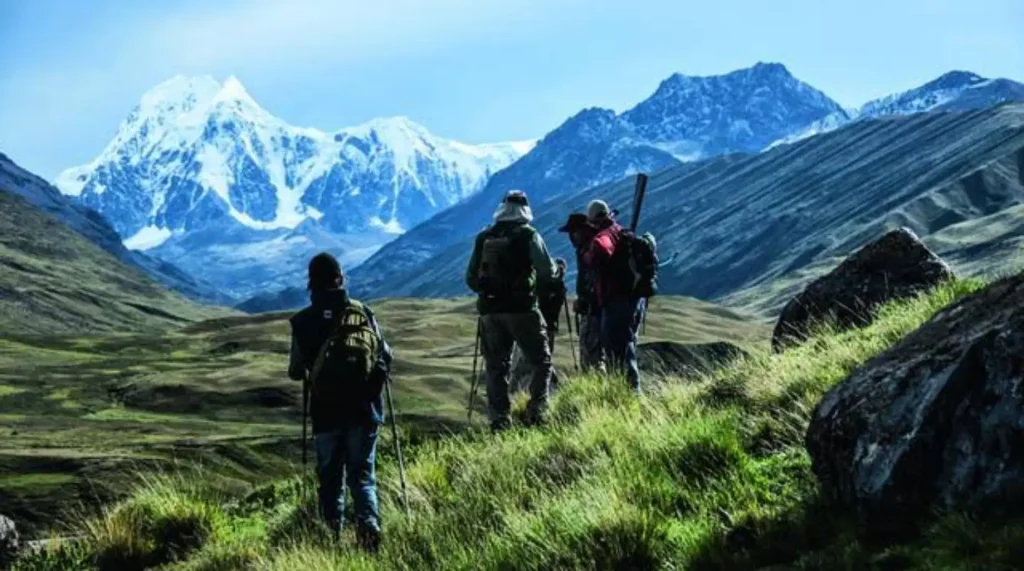
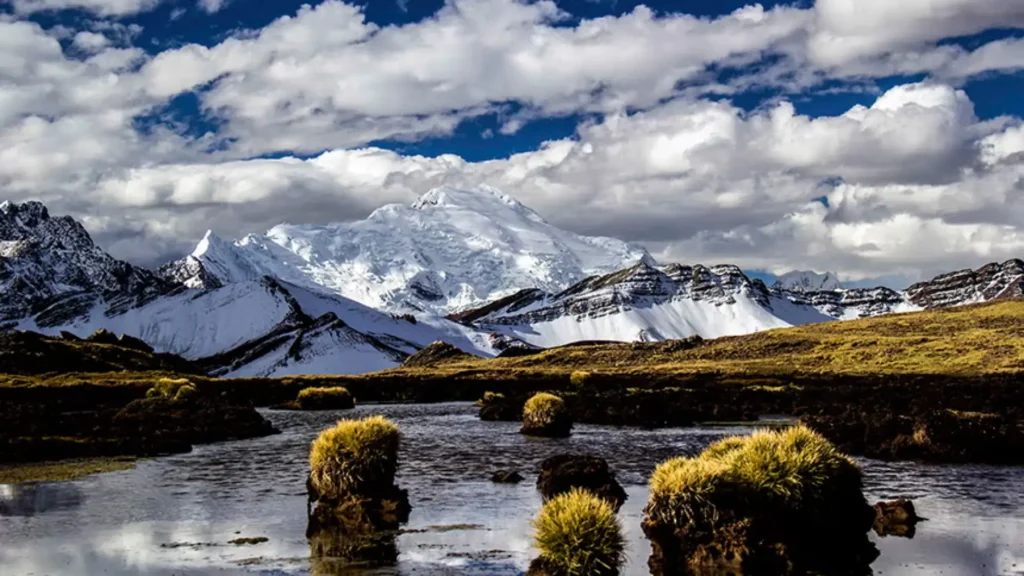
The Andean landscapes of Ausangate are among the route’s greatest attractions. During the trek, visitors observe vast valleys, glaciers, snow-covered mountains, and extensive grazing lands that maintain a traditional appearance.
The Ausangate lakes are especially notable for their different shades. Some display turquoise colors, while others show green or deep blue tones. These variations result from geological and mineral factors present in the environment. In addition, the surrounding snow-capped mountains create scenery highly appreciated by photographers and nature enthusiasts.
As the journey progresses, the landscapes change continuously. For this reason, each day offers unique visual experiences. Likewise, atmospheric conditions alter the appearance of the surroundings throughout the day. This scenic diversity explains why the Ausangate Trek is considered one of the most valued routes among travelers seeking direct contact with Andean nature.
Palomani Pass Trekking and the Highest Sections of the Route
The Palomani Pass trekking section represents one of the most demanding parts of the route. This area exceeds 5,000 meters in altitude and is one of the highest mountain passes along the traditional circuit.
During the ascent, trekkers must advance gradually to avoid altitude-related issues. In addition, weather conditions can change rapidly, bringing low temperatures and strong winds. For this reason, appropriate mountain clothing is essential.
Despite the physical challenge, reaching Palomani Pass offers one of the greatest visual rewards of the trek. From this point, it is possible to enjoy broad views of surrounding valleys and nearby snow-capped peaks. As a result, many travelers consider this section one of the most memorable moments of the Ausangate Trek.
Camping in Ausangate and the Nighttime Experience
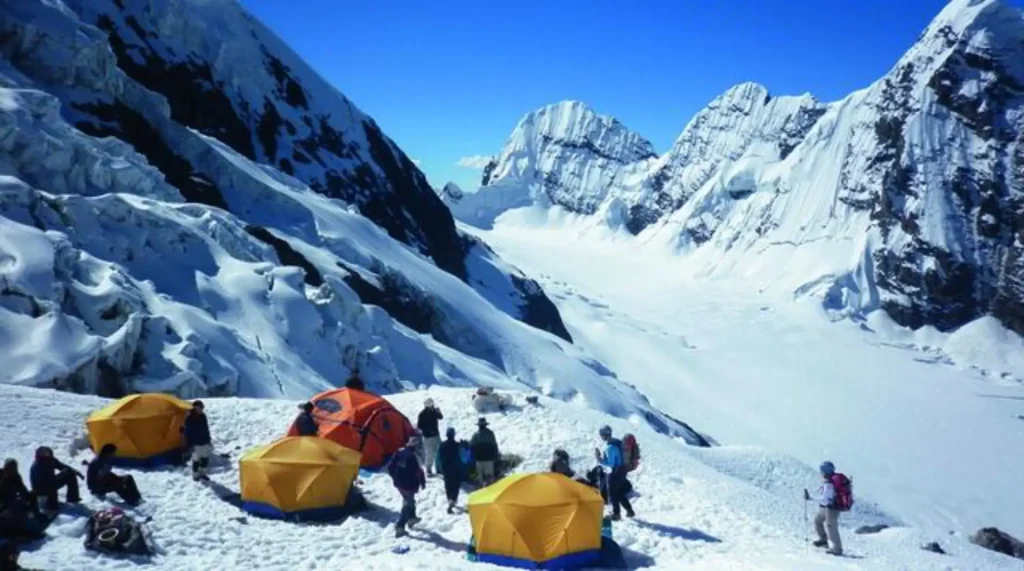
Camping in Ausangate is an essential part of the experience. Most programs include overnight stays in designated camping areas located near lakes or grazing zones used by local communities.
During the night, temperatures often drop significantly due to the altitude. Therefore, proper equipment is necessary to withstand cold conditions. In addition, mountain-rated sleeping bags contribute greatly to comfort while resting.
The camping experience allows visitors to enjoy closer contact with the natural environment. Likewise, it offers opportunities to observe clear skies and night landscapes with minimal light pollution. These characteristics make camping an important component of the overall appeal of the Ausangate Trek.
Wildlife and Alpacas of Ausangate During the Trek
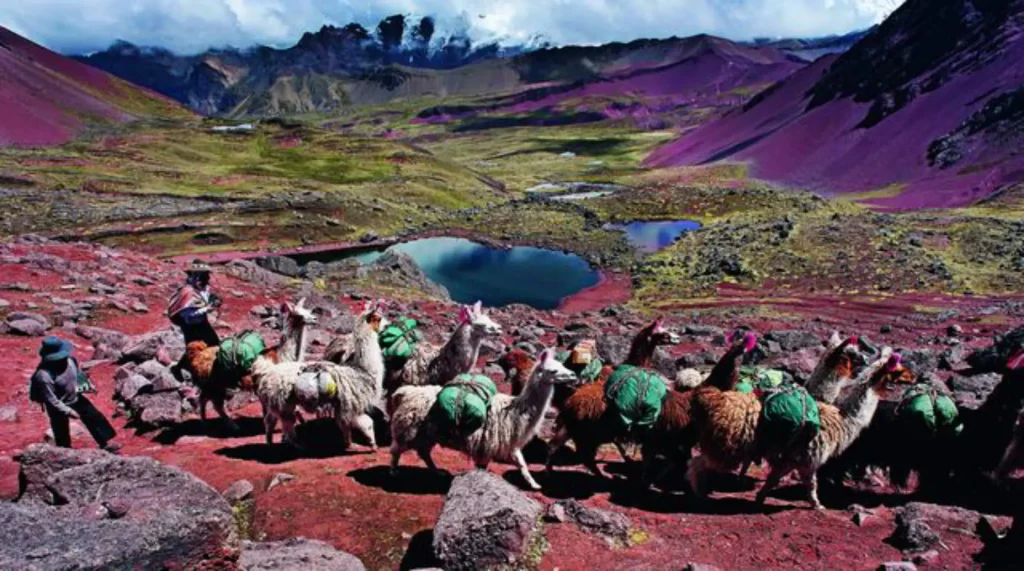
The wildlife and alpacas of Ausangate are another highlight of the journey. Along the route, it is common to observe herds of alpacas and llamas managed by local communities dedicated to traditional herding.
In addition, the region is home to wild species adapted to high-altitude environments. These include vicuñas, viscachas, and various Andean birds. Likewise, in some areas it is possible to observe condors using thermal currents to glide above the valleys.
The presence of these animals enriches the experience and helps visitors better understand the historical relationship between local communities and their natural surroundings. For this reason, many travelers believe wildlife observation perfectly complements the mountain adventure.
Pacchanta Hot Springs and Relaxation After the Hike
The Pacchanta Hot Springs are among the most visited locations in the Ausangate region. These natural thermal waters are located in a community near the mountain and are often included in many itineraries.
After several days of hiking, many trekkers take advantage of these pools to relax and recover energy. In addition, the views toward the snow-capped mountain create a particularly attractive setting for rest.
A visit to Pacchanta also provides an opportunity to learn about the daily life of high-Andean communities. As a result, the experience combines physical well-being with cultural immersion among local populations.
Rainbow Mountain and Ausangate Trek Within the Same Experience
The connection between Rainbow Mountain and the Ausangate Trek has become increasingly popular in recent years. Many itineraries include a visit to Vinicunca, internationally known as the Rainbow Mountain.
This combination allows travelers to take advantage of the geographical proximity between both attractions. In addition, it offers the opportunity to observe very different geological landscapes within the same expedition. However, including Vinicunca usually requires an additional day or modifications to the traditional itinerary.
Therefore, travelers wishing to visit both destinations should carefully review the program details before booking. This planning helps distribute physical effort appropriately and optimize the overall experience.
Best Time to Visit Ausangate and Weather Conditions
The best time to visit Ausangate generally coincides with the dry season in the Peruvian Andes, which typically extends from May through September. During these months, rainfall is less frequent and trails are usually in better condition for hiking.
However, nighttime temperatures can drop significantly because of the altitude. In addition, solar radiation tends to be intense during the day. For this reason, it is important to use proper protection and wear clothing suitable for different weather conditions.
During the rainy season, the route remains accessible under certain conditions. Nevertheless, some sections may become more challenging due to moisture and trail conditions. Therefore, many travelers prefer to schedule the Ausangate Trek during the driest months of the year.
Adventure Tours in Cusco and Recommendations for the Ausangate Trek
Adventure tours in Cusco include a wide variety of options for hiking enthusiasts. However, the Ausangate Trek stands out because of its combination of natural landscapes, Andean culture, and physical challenges.
Before beginning the route, it is recommended to:
- Spend several days in Cusco for acclimatization.
- Maintain constant hydration.
- Wear suitable mountain hiking boots.
- Bring clothing for sudden temperature changes.
- Hire operators with experience in high-altitude routes.
- Follow the recommendations of the guides.
- Have appropriate travel insurance.
Following these recommendations helps improve safety and allows travelers to fully enjoy an authentic hiking adventure in Cusco.
Frequently Asked Questions
1. Is previous hiking experience required to complete the Ausangate Trek?
Advanced experience is not mandatory. However, basic mountain hiking experience is beneficial. The altitude and long hiking days require physical endurance. For this reason, proper preparation greatly facilitates adaptation to the route and improves the overall experience.
2. Is it possible to complete the route without a guide?
Yes, some experienced trekkers complete the route independently. However, hiring a guide offers advantages related to safety, navigation, and environmental knowledge. In addition, it allows visitors to gain a deeper understanding of the cultural and natural aspects encountered along the journey.
3. What type of gear is recommended?
A comfortable and durable backpack is recommended. In addition, it is important to bring thermal clothing, waterproof gear, sunscreen, sunglasses, a hat, gloves, and basic first-aid supplies. Proper equipment significantly contributes to comfort during the trek.
4. Are emergency services available along the route?
The route passes through remote areas where services are limited. For this reason, tour operators usually carry basic first-aid equipment and establish safety protocols. In addition, having travel insurance is recommended for any mountain activity.
5. What makes the Ausangate Trek different from other routes in Cusco?
The main distinguishing feature is the altitude and natural environment. Unlike more crowded routes, the Ausangate Trek offers large-scale mountain scenery and fewer visitors. In addition, it allows closer interaction with rural communities and high-Andean ecosystems.
Discover our travel packages to Peru and let us organize the perfect adventure for you. Request your quote for your trip to Cusco today!