Choquequirao the Sacred Sister of Machu Picchu is one of the most important archaeological destinations in Peru. Its popularity has grown in recent years due to its architectural similarities with Machu Picchu, its location in the Andes Mountains, and the adventure it offers visitors. Although both complexes belong to the Inca civilization, each has its own distinctive characteristics. For this reason, many travelers seek to understand the differences before planning their trip. In addition, the limited access to Choquequirao the Sacred Sister of Machu Picchu allows visitors to enjoy a less crowded environment. This condition is especially appealing to those seeking a deeper connection with history, nature, and the cultural heritage of the ancient Inca Empire.
Origin of the Name and Meaning of Choquequirao
The meaning of Choquequirao comes from the Quechua language. Various studies agree that the name can be interpreted as “Cradle of Gold”, a designation related to the symbolic importance this place held within the Andean world. The site is located in a strategic position above the Apurímac River canyon, surrounded by mountains that formed part of the territory controlled by the Incas.
The historical significance of the site has contributed to Choquequirao the Sacred Sister of Machu Picchu being considered one of the most valuable archaeological treasures in the region. Furthermore, its geographical setting favored control over communication routes between the Andes and the Amazonian regions. Therefore, it was not merely a ceremonial settlement. It also fulfilled administrative, economic, and strategic functions within the Inca imperial structure.
History of Choquequirao and Its Connection to the Inca Empire
The history of Choquequirao is closely linked to the expansion of the Inca Empire during the fifteenth century. Various researchers believe it was built during the reign of Pachacútec, the ruler responsible for consolidating the empire’s territory. Later, the complex likely played an important role along the routes connecting the region of Vilcabamba with other areas of the Inca realm.
Following the arrival of the Spanish, the region gained importance during the Inca resistance led by Manco Inca Yupanqui. Due to its remote location and difficult access, many sectors remained hidden for centuries. Today, much of the complex continues to undergo archaeological research. It is estimated that only a portion of the site has been excavated and restored. This situation makes Choquequirao the Sacred Sister of Machu Picchu one of the most important archaeological projects in modern Peru.
Choquequirao the Sacred Sister of Machu Picchu and the Origin of This Designation
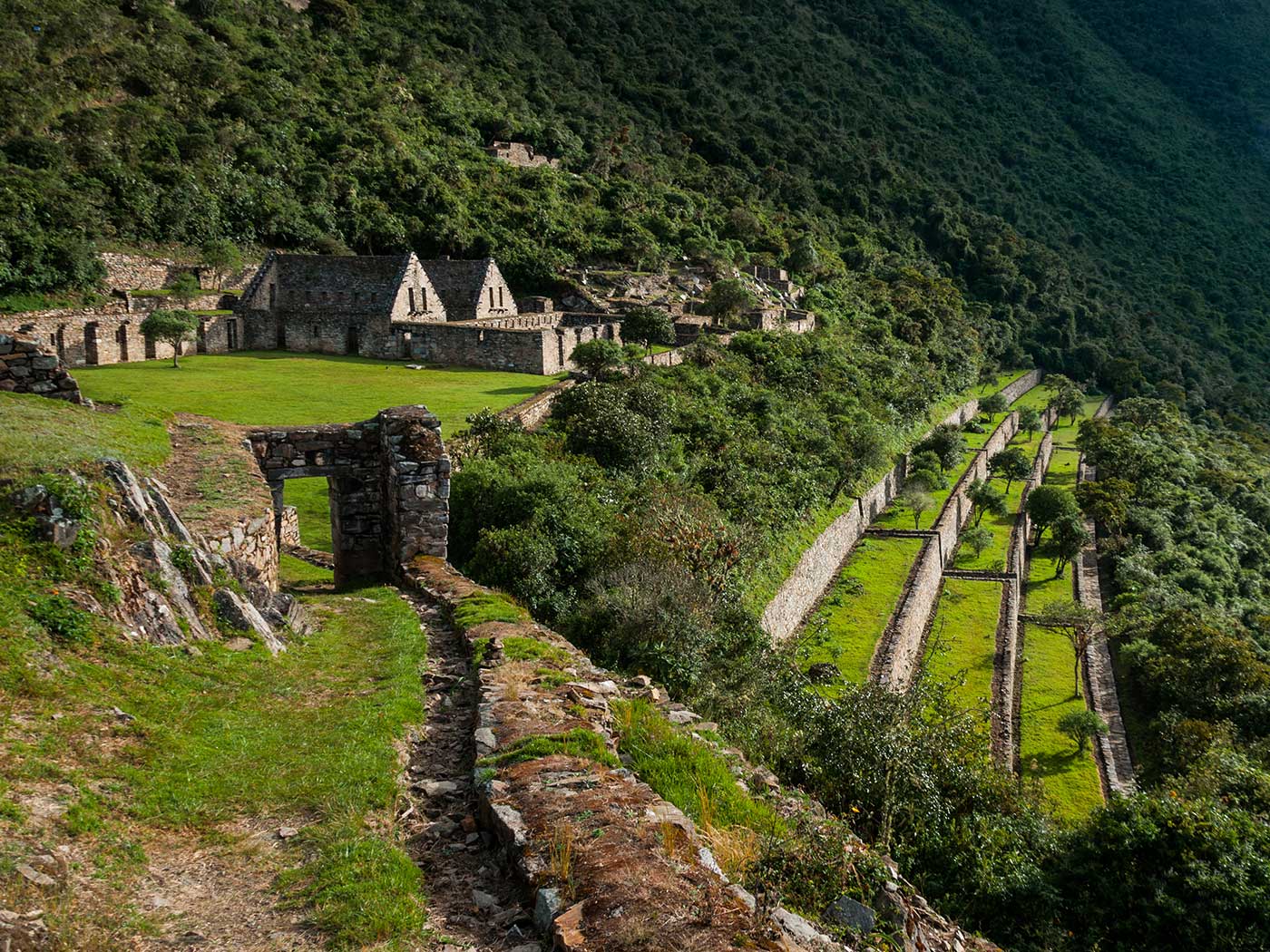
The expression Choquequirao the Sacred Sister of Machu Picchu emerged because of the numerous architectural and urban similarities between the two complexes. Both sites feature ceremonial plazas, agricultural terraces, hydraulic systems, and carefully crafted stone structures. In addition, both were built in mountainous locations overlooking deep Andean valleys.
However, the designation does not mean that the two complexes are identical. On the contrary, each developed specific functions within the Inca political and religious system. Nevertheless, the similarities are sufficient for archaeologists, historians, and travelers to frequently use this term. Moreover, the arrangement of ceremonial and agricultural spaces reinforces the comparison. For this reason, Choquequirao the Sacred Sister of Machu Picchu has become one of the most recognized names in Peruvian cultural tourism.
Choquequirao Archaeological Complex and Its Main Sectors
The Choquequirao archaeological complex extends across a vast area distributed over different levels of the mountain. Its urban planning reflects the engineering knowledge and organizational skills developed by the Incas. The various sectors are connected by trails, stairways, and terraces adapted to the geography of the site.
Among the most notable areas are:
- The main plaza.
- The ceremonial enclosures.
- The agricultural terraces.
- The water channel systems.
- The residential sectors.
- The famous terraces decorated with llama figures.
These llama representations made from white stones are among the site’s most distinctive features. In addition, they demonstrate the important role that Andean camelids played in the economy and worldview of the Incas. Thanks to these characteristics, Choquequirao the Sacred Sister of Machu Picchu offers an archaeological experience that differs greatly from other destinations in the country.
Tourist Attractions of Choquequirao and Panoramic Views of the Surroundings
The tourist attractions of Choquequirao extend far beyond its archaeological structures. The natural environment forms an essential part of the experience. Throughout the journey, visitors can observe a remarkable diversity of ecosystems that change as the route progresses through the mountains.
The panoramic views of Choquequirao allow travelers to admire the immense Apurímac Canyon, considered one of the deepest canyons in the Americas. In addition, the route crosses areas inhabited by characteristic species of the Peruvian Andes. These include the Andean condor, various mountain birds, and a wide variety of native flora.
The combination of archaeological heritage and nature makes Choquequirao the Sacred Sister of Machu Picchu a highly attractive alternative for travelers seeking less crowded experiences. Furthermore, the sense of isolation allows visitors to enjoy the landscape peacefully and without large groups of tourists.

Trekking Route to Choquequirao and Access from Cusco
The trekking route to Choquequirao is considered one of the most demanding and rewarding hikes in Peru. Most travelers begin the journey from the region of Cusco, using ground transportation to reach the area of Capuliyoc.
The route involves steep descents toward the Apurímac River followed by challenging ascents to the archaeological complex. Because of these conditions, the hike requires good physical preparation. However, the effort is usually rewarded with spectacular scenery and an authentic cultural experience.
For those researching how to get to Choquequirao, the most common option is to book a Choquequirao tour from Cusco or complete the hike independently. Both alternatives provide access to the site, although organized tours offer additional logistical support throughout the journey.
Hike to Choquequirao from Capuliyoc and Campsites Along the Route
The hike to Choquequirao from Capuliyoc represents the traditional starting point for most expeditions. From this viewpoint, travelers begin a long descent into the canyon. Later, hikers cross bridges and trails before starting the ascent toward the archaeological complex.
The campsites in Choquequirao are an essential part of the experience. Due to the duration of the trek, travelers typically spend the night in designated camping areas along the route. These locations provide opportunities to rest and continue the journey safely.
The most commonly used campsites offer space for tents and designated areas for organized groups. In addition, they provide the opportunity to admire unique mountain scenery during sunrise and sunset. Therefore, the experience extends far beyond a simple archaeological visit.
Multi-Day Choquequirao Trek and Hiking Adventure in the Andes
The multi-day Choquequirao trek generally lasts between four and five days. This duration allows travelers to complete the route more comfortably and dedicate sufficient time to exploring the archaeological complex.
The hiking adventure in Choquequirao stands out because of its constant altitude changes and diverse landscapes. Throughout the journey, hikers pass through dry areas, mountain forests, and sections with more humid vegetation. In addition, travelers can observe the contrast between deep canyons and towering Andean peaks.
Unlike other popular trekking routes, visitor numbers remain relatively low. This characteristic helps preserve a quieter experience and a closer connection with the natural environment. For this reason, many hikers consider Choquequirao the Sacred Sister of Machu Picchu one of the finest archaeological treks in South America.

Choquequirao vs Machu Picchu and the Best Choice for Travelers
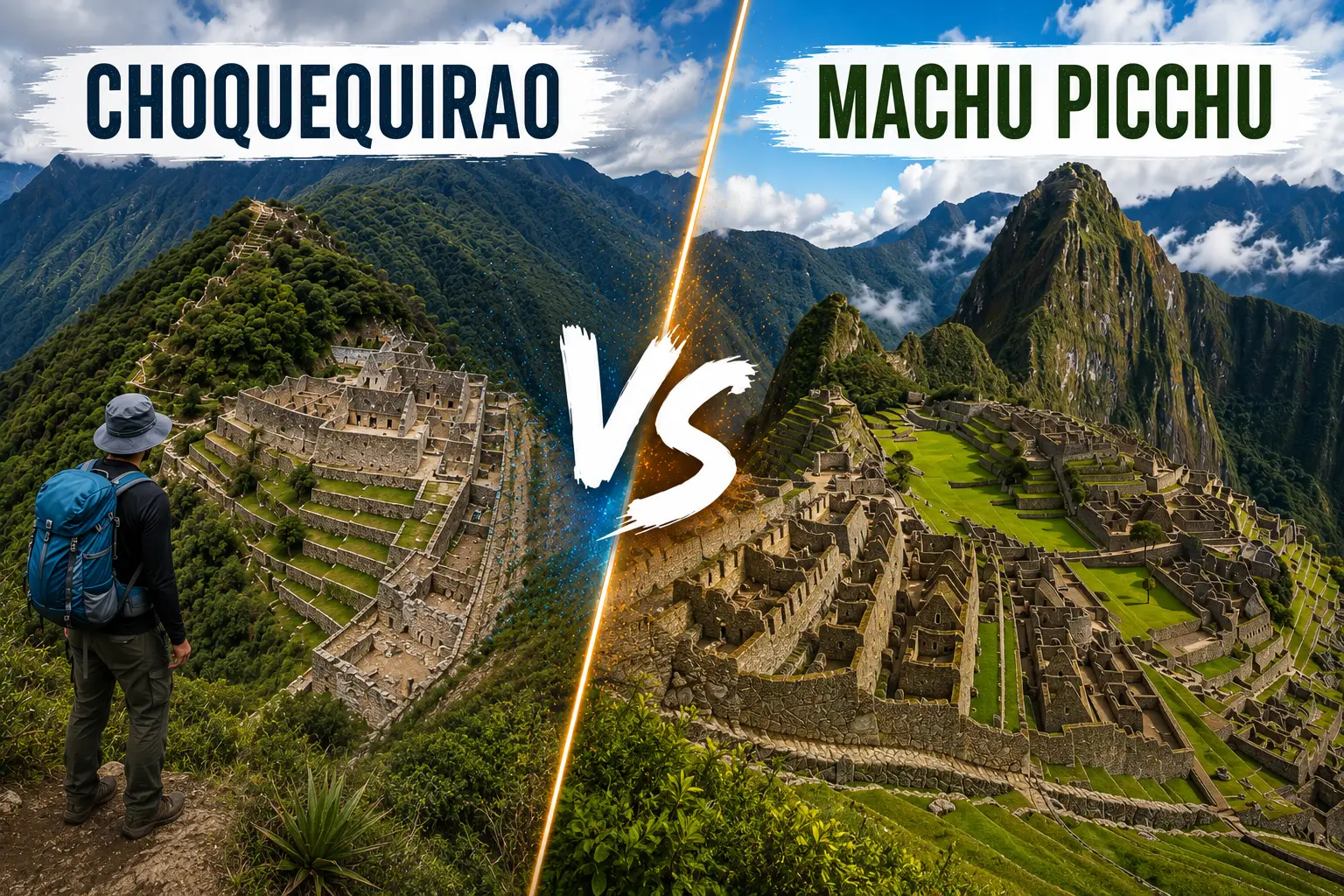
The comparison between Choquequirao vs Machu Picchu is common among travelers planning a trip to Peru. Both destinations possess enormous historical value. However, the tourist experience differs in several aspects.
Machu Picchu offers well-developed infrastructure, railway access, and a broad range of tourist services. On the other hand, Choquequirao the Sacred Sister of Machu Picchu requires several days of hiking to reach the archaeological site.
The main differences include:
- Greater accessibility at Machu Picchu.
- Fewer visitors at Choquequirao.
- Greater physical demands on the Choquequirao route.
- A more solitary archaeological experience at Choquequirao.
- More developed tourism infrastructure at Machu Picchu.
The choice depends on each traveler’s profile. Those seeking convenience often prefer Machu Picchu. In contrast, travelers looking for adventure and direct contact with nature tend to choose Choquequirao the Sacred Sister of Machu Picchu.
Best Time to Visit Choquequirao and Trip Planning
The best time to visit Choquequirao generally corresponds to the dry season months. During this period, weather conditions facilitate movement along the trails and reduce the likelihood of heavy rainfall.
Between April and October, conditions are usually more favorable for hiking. However, the route can be visited throughout much of the year with proper preparation. In addition, temperatures vary considerably between day and night.
For this reason, it is advisable to bring clothing suitable for different weather conditions. It is also important to spend time acclimatizing in Cusco before beginning the trek. This preparation allows travelers to fully enjoy Choquequirao the Sacred Sister of Machu Picchu while reducing the effects of altitude.
Cultural Value and Tourism Future of Choquequirao
The growing interest in Choquequirao the Sacred Sister of Machu Picchu reflects the importance of diversifying cultural tourism in Peru. The site offers an exceptional opportunity to learn about the Inca legacy from a different perspective. Furthermore, it helps distribute visitor traffic among various archaeological destinations.
Research continues to reveal new discoveries within the complex. Therefore, both scientific and tourism interest are expected to continue growing in the coming years. As new conservation projects advance, more travelers will be able to discover this important historical heritage.
Thanks to its combination of archaeological heritage, nature, and adventure, Choquequirao the Sacred Sister of Machu Picchu has established itself as one of the most fascinating destinations for travelers seeking to explore the Inca past beyond traditional routes.

Frequently Asked Questions
1. How much does it currently cost to visit Choquequirao?
The total cost depends on the type of trip selected. Independent travelers usually spend less on tourism services, although they must manage all logistics themselves. Organized tours include transportation, meals, guides, and camping equipment. In addition, prices may vary depending on the season and the duration of the trek. Personal expenses and specialized hiking gear should also be considered.
2. Is it necessary to hire a guide to enter Choquequirao?
Hiring a guide is not always mandatory. However, many travelers choose to do so because of the complexity of the route. A guide provides historical information and helps with navigation throughout the trek. In addition, guides can assist with issues related to altitude, logistics, and changing weather conditions.
3. What level of fitness is required for the hike to Choquequirao?
The route requires a moderate to high level of physical fitness. Elevation changes are significant, and some sections involve several hours of continuous hiking. For this reason, it is advisable to complete physical training beforehand and spend several days acclimatizing before starting the expedition.
4. Are there accommodation services within the archaeological complex?
There are no hotels inside the archaeological site. Visitors use camping areas located along the trekking route. Some tours include all necessary camping equipment. In addition, certain nearby sectors offer basic services designed for hikers and organized groups.
5. Is it possible to combine Choquequirao and Machu Picchu in the same trip?
Yes. There are specialized trekking routes that connect both destinations. These journeys usually require several additional days and demand good physical preparation. Combining both sites allows travelers to explore two of the most important archaeological complexes of the Inca legacy within a single travel experience.
Discover our travel packages to Peru and let us organize the perfect adventure for you. Request your quote for your trip to Cusco today!