The Inca Jungle Bike Descent is one of the main activities on this adventure route to Machu Picchu. The experience begins in the high-altitude areas near Abra Málaga and continues toward lower-altitude areas near Santa María. During the route, the landscape gradually changes from high-Andean environments to areas of cloud forest and upper jungle.
In addition, the bicycle allows travelers to cover a considerable distance during the first day while the road continuously loses elevation. However, this is not a race or an activity where maintaining a high speed is necessary. Bicycle control, attention to the road, and following the guide’s instructions are essential aspects.
Therefore, knowing the characteristics of the route helps you enjoy the activity more comfortably. It also allows you to choose a suitable pace according to your personal experience and the road conditions. For many travelers, this part of the Inca Jungle Trek represents their first contact with a route that combines cycling, hiking, and nature.
Inca Jungle Bike Descent Route
The Inca Jungle Bike Descent takes place during the first stage of many versions of the route. The group normally travels by vehicle to a high-altitude area near Abra Málaga, where the cycling activity begins. Before starting, it is important to carry out a complete inspection of the bicycle and protective equipment. The guide should also explain the main characteristics of the route and basic safety rules. The starting point can have low temperatures and conditions that differ from those encountered later.
Therefore, it is advisable to bring an extra layer to use during the transfer and the first moments. After beginning the descent, the temperature usually increases gradually as elevation decreases. The route allows travelers to observe significant changes in vegetation and natural surroundings. However, attention should remain primarily focused on the road and not only on the views. Curves and changes in the road surface require each maneuver to be anticipated with enough space. In addition, maintaining a safe distance between bicycles facilitates reactions to any unexpected situation. The main objective should be to complete the route in a controlled and safe manner.
Bike Descent from Abra Málaga
The bike descent from Abra Málaga begins after the transfer from Cusco toward the high-altitude areas. Before starting the activity, it is important to check the bicycle and equipment thoroughly. The guide should also explain the main characteristics of the route and basic safety rules. The starting point can have low temperatures and conditions that differ from those encountered later. Therefore, it is advisable to bring an extra layer to use during the transfer and the first moments. After beginning the descent, the temperature usually increases gradually as elevation decreases.
The route allows travelers to observe significant changes in vegetation and natural surroundings. However, attention should remain primarily focused on the road and not only on the views. Curves and changes in the road surface require each maneuver to be anticipated with enough space. In addition, maintaining a safe distance between bicycles facilitates reactions to any unexpected situation. The main objective should be to complete the route in a controlled and safe manner.
Bike Ride Through the Inca Jungle
The bike ride through the Inca Jungle is mainly characterized by a continuous descent from high-altitude areas toward warmer environments. The first part features a mountainous setting with relatively sparse vegetation. As elevation decreases, landscapes with greater vegetation and conditions typical of the cloud forest begin to appear. Later, the route approaches areas with a warmer climate associated with the upper jungle.
This transition is one of the elements that distinguishes the cycling experience from other treks to Machu Picchu. The cyclist does not remain throughout the route in the same type of landscape. In addition, temperature, humidity, and vegetation can change considerably during the day. Some operators also include stops along the route to regroup participants.
These breaks allow travelers to drink water, adjust their equipment, and check that everyone is maintaining an appropriate pace. However, stops and the exact distance depend on the specific program. Therefore, it is advisable to review the specific itinerary before booking.
Inca Jungle Bike Section
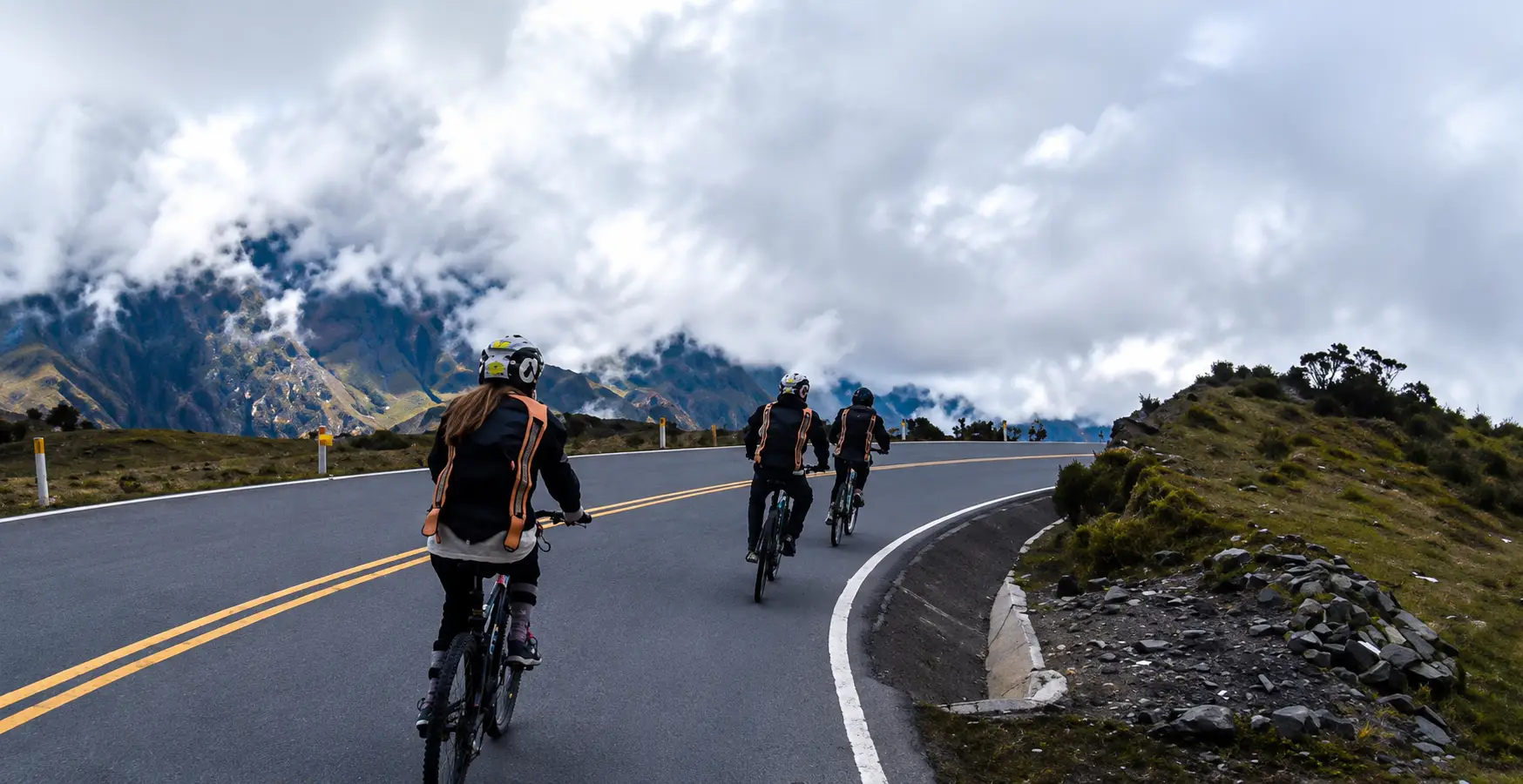
The Inca Jungle bike section requires a combination of control, concentration, and adaptation to the terrain. Most of the physical effort does not involve long uphill sections. Instead, the descent requires proper use of the brakes and maintaining a stable position on the bicycle. Some sections may have consecutive curves, wet conditions, or surfaces with reduced traction.
In addition, traffic from other vehicles may be present on certain parts of the road. For this reason, participants should follow the guide’s instructions and the traffic conditions. It is also advisable to avoid unnecessary overtaking when available space is limited. Responsible riding is especially important when the group passes through areas with reduced visibility. The descent should always be completed at a speed that allows you to stop in a controlled manner. In this way, the experience can remain within a reasonable level for each participant.
Difficulty of the Bike Descent
The difficulty of the bike descent depends on several factors and cannot be determined solely by distance. The elevation loss helps the rider move forward, but it can also naturally increase speed. Therefore, a person with little experience should pay particular attention to controlling the brakes. The rider should also feel comfortable maintaining balance through curves and changes in surface. Some operators describe this activity as easy or moderate in difficulty. However, actual conditions can change because of rain, humidity, traffic, road maintenance, and individual experience.
A person accustomed to using a mountain bike will probably adapt more easily. On the other hand, a traveler who only rides a bicycle occasionally may need a more conservative pace. There is no need to try to keep up with the fastest cyclists in the group. In addition, if someone feels unsafe during the descent, they should immediately inform the guide. Depending on the operator, there may be an option to continue certain sections by vehicle. This alternative should be confirmed before the trip and should not be assumed to be included as a service.
Mountain Bike in the Inca Jungle
The mountain bike in the Inca Jungle is intended for a downhill route on roads and not necessarily for a technical mountain-bike course. The exact characteristics of the bicycles may vary depending on the company you book with. Some operators use mountain bikes with front suspension and equipment designed specifically for the activity. They may also provide helmets, gloves, and additional protective gear. Before starting the route, the participant should check that the bicycle is properly adjusted.
The seat height should allow for a comfortable and stable position. In addition, the brakes should respond correctly and the tires should be in good condition. It is advisable to perform a short test before beginning the main descent. This allows you to become familiar with the sensitivity of the brakes and the bicycle’s response. It also makes it easier to detect any problems before reaching a more demanding section. If there is any issue, it should be immediately reported to the guide. You should not begin a long descent using a bicycle that has mechanical problems.
Safety on a Bicycle in the Inca Jungle
Safety on a bicycle in the Inca Jungle should be considered a priority throughout the activity. Proper helmet use is essential, and the helmet should remain on throughout the route. It is also advisable to use gloves to improve grip and protect your hands. Some companies provide additional knee and elbow protection. However, the exact equipment depends on the service you book. Before departure, the guide should explain traffic rules and the main characteristics of the route.
Participants should maintain an appropriate distance between bicycles throughout the descent. They should also avoid sudden braking when it is not necessary. A sudden maneuver can affect the cyclist riding behind. In curves, it is important to reduce speed before entering rather than during the tightest part. In addition, overtaking should not be attempted without authorization or enough space. The presence of vehicles requires additional attention to the road. These measures do not eliminate every risk, but they help reduce avoidable situations during the activity.
Recommendations for the Bike Descent
The recommendations for the bike descent begin before getting on the bicycle. Proper preparation helps you better handle changes in temperature and route conditions. It is advisable to bring clothing that can easily adapt to changing weather during the descent. It is also useful to have water and sun protection, even when the sky is cloudy. Ultraviolet radiation can remain high in higher-altitude areas. In addition, conditions can change quickly in the mountains and cloud forest. For the cycling activity, consider the following points:
- Always wear a helmet and keep the straps properly adjusted.
- Check the brakes before starting the main descent.
- Maintain enough distance from the other cyclists.
- Control your speed according to the slope, surface, and visibility.
- Reduce your speed before curves, especially when they are tight.
- Avoid unnecessary overtaking on narrow sections or areas with traffic.
- Follow the guide’s instructions during stops and transfers.
- Report any mechanical problem before continuing.
- Bring sun protection and water throughout the day.
- Wear layered clothing to adapt to temperature changes.
These measures are simple, but they become more important when the route combines mountains, roads, and changing weather conditions. In addition, maintaining a relaxed riding style allows you to conserve energy for the following activities of the Inca Jungle Trek.
Cycling in the Inca Jungle and Landscape Changes
Cycling in the Inca Jungle allows you to observe a geographic transition that develops as the bicycle loses elevation. The beginning takes place in a high-Andean environment with considerably lower temperatures. Route then moves toward areas where vegetation gradually becomes more abundant. The cloud forest appears as an important part of the transition between the Andes and the upper jungle. Finally, the route approaches lower-altitude areas with warmer weather. This transformation can be particularly interesting for travelers looking to combine physical activity and nature.
However, it is important to remember that the main objective during the descent is safe riding. Photos should only be taken during authorized stops and never while riding. It is also advisable to protect electronic devices from moisture and possible impacts. Changes in weather can cause condensation or affect certain sensitive equipment. In addition, rainy conditions can change the experience and reduce visibility. Therefore, the travel date can influence comfort and riding conditions.
Inca Jungle Cycling Experience
The Inca Jungle cycling experience is part of a broader route that normally combines different activities. The complete program may include hiking, accommodation, and other adventure experiences. However, these services are not identical among all operators. Some additional activities may be optional or depend on the conditions of the day. For this reason, it is important to review exactly what is included in the booking before purchasing it. Cycling mainly consists of a downhill activity during the first stage. Afterward, the route continues toward lower-altitude areas where other activities take place.
This combination can appeal to travelers who want to alternate between cycling and hiking. The route also offers a different way to approach Machu Picchu. However, the Inca Jungle should not be confused with the Classic Inca Trail. The authorized Inca Trail corresponds to a network of heritage routes managed under specific conservation regulations. The Inca Jungle follows a different route and normally reaches Machupicchu Pueblo afterward. This difference is important when comparing both experiences. In addition, the final access to Machu Picchu must be coordinated carefully with transportation and the activities included in the itinerary.
Bike Descent Toward Machu Picchu
The bike descent toward Machu Picchu represents only one part of the complete journey. The bicycle does not take you directly to the archaeological site of Machu Picchu. After completing the descent, the program continues through different stages depending on the itinerary booked. In many versions, travelers pass through areas such as Santa María, Santa Teresa, and Machupicchu Pueblo. Activities and transportation methods can vary between companies.
Therefore, it is advisable to review the specific program before making a reservation. It is also important to distinguish the final access to Machu Picchu from the bicycle route. The citadel currently has established visitor circuits and routes under the corresponding authorities. Entry depends on a valid ticket and the assigned route. Therefore, completing the Inca Jungle does not automatically mean having access to every area of Machu Picchu. This planning is especially important for travelers who want to visit the citadel after the trek. In addition, schedules must be carefully coordinated with transportation and itinerary activities.
Adventure Cycling in the Inca Jungle
Adventure cycling in the Inca Jungle is suitable for travelers looking for an alternative to conventional trekking. Its main characteristic is beginning at high altitude and gradually descending toward lower-altitude environments. The route combines controlled speed, curves, changing landscapes, and adaptation to different weather conditions. However, adventure should not be interpreted as an invitation to ride quickly. Excessive speed can significantly increase risk on a mountain road.
Therefore, responsible riding should be maintained throughout the route. It is also important to recognize your own limits and avoid unnecessary maneuvers. People with limited experience can inform the guide before starting. The guide can provide specific instructions to improve control during the first sections. In addition, practicing gentle braking before the main descent can help you become familiar with the bicycle. The activity is best enjoyed when each participant maintains a pace compatible with their abilities. In this way, the adventure component remains combined with proper planning and control.
Cycling Route Toward Machu Picchu and Weather Conditions
The cycling route toward Machu Picchu crosses different ecological zones, and therefore weather conditions can vary during the same day. In the high-altitude areas, the environment can be cold and windy. Meanwhile, lower-altitude areas generally have warmer temperatures and higher humidity. During the rainy season, the surface may be wet and visibility can decrease. These conditions directly affect bicycle control. In addition, rainfall can temporarily change road conditions.
Therefore, the decision to complete the descent should consider the actual conditions of the day. Operators may modify activities when conditions create a safety risk. Travelers should also accept that an adventure program may change for safety reasons. It is not advisable to pressure the guide to maintain an itinerary when conditions are unsuitable. Safety should take priority over completing a specific activity. Likewise, checking the expected conditions before the trip allows you to better prepare your clothing and personal equipment.
Preparation for the Bike Ride
Preparing for the Inca Jungle Bike Descent does not necessarily require advanced athletic training. However, you should have sufficient bicycle control and some endurance to maintain concentration for several hours. The difficulty can increase when there are continuous curves, wet conditions, or changes in the road surface. In addition, the activity begins in a high-altitude area, although the subsequent descent quickly reduces elevation. The participant should arrive rested and properly hydrated. It is also advisable to avoid consuming alcohol before the activity. On the day of the descent, an adequate breakfast can help maintain energy throughout the day.
Clothing should allow you to adapt to very different temperatures. A small backpack can carry personal items without significantly affecting your riding. Main luggage is normally handled according to the conditions of the operator you book with. Before traveling, it is advisable to confirm this point directly with the company. It is also useful to verify which protective equipment is included and which items must be brought personally. With this preparation, the Inca Jungle Bike Descent can be approached with greater comfort and control.
Differences Between the Inca Jungle and Other Treks
The Inca Jungle Bike Descent has a characteristic that clearly differentiates it from routes such as the Inca Trail. Instead of focusing exclusively on hiking, the Inca Jungle combines cycling with other activities. The Inca Trail, on the other hand, uses authorized heritage routes within the Machupicchu National Archaeological Park. In addition, access to the Inca Trail is subject to a specific control and conservation system. The Inca Jungle follows a different route and is not a variation of the Classic Inca Trail.
This distinction is important for travelers comparing both experiences. Those looking for a historical hike with numerous archaeological sites may prefer the Inca Trail. Meanwhile, travelers who want to combine cycling, hiking, and adventure activities may consider the Inca Jungle. The level of difficulty is also distributed differently. In the Inca Jungle, cycling concentrates a significant part of the initial activity. Later, hikes generally take place in lower-altitude areas. Therefore, the choice mainly depends on the type of experience each traveler is looking for.
Things to Check Before Booking
Before booking the Inca Jungle Bike Descent, it is advisable to review several aspects of the service. The commercial name of the tour does not guarantee that every company offers exactly the same program. The distance of the descent, type of bicycle, protective equipment, and schedules may vary. Additional activities, accommodations, and transportation conditions may also differ. Therefore, comparing only the price can lead to important differences between two programs that appear similar. Pay particular attention to the following points before booking:
- Exact descent distance included in the itinerary.
- Starting point and approximate altitude of the route.
- Type of bicycle used during the activity.
- Protective equipment included in the service.
- Guide presence throughout the entire section.
- Backup transportation available in case of problems or fatigue.
- Conditions for canceling or modifying the activity due to bad weather.
- Additional activities included or considered optional.
- Transportation to Machupicchu Pueblo during the later stages.
- Machu Picchu entrance ticket, which should be checked separately.
This check helps avoid confusion and allows you to choose a program that matches your personal needs. In addition, it makes it easier to compare services that may have significant differences even though they use the same commercial name.
Frequently Asked Questions About the Inca Jungle Bike Descent
1. Is previous bicycle experience necessary for the Inca Jungle?
Not necessarily, but you should feel comfortable controlling a bicycle. The descent requires proper brake control and the ability to maintain balance. You should also be able to react to curves, changes in surface, and possible vehicles. A person with little experience should communicate this to the guide before starting. In addition, maintaining a conservative speed throughout the activity is recommended. There is no need to compete with other members of the group. The ability to control the bicycle is more important than reaching a specific speed. If you have doubts about your skill level, consult the operator before booking.
2. Is the bicycle included in the Inca Jungle tour?
Generally, programs that include the descent provide a bicycle for the activity. However, the characteristics of the equipment depend on the operator you book with. Some companies offer mountain bikes with front suspension. They may also provide helmets, gloves, and additional protective equipment. Therefore, you should not assume that every service includes exactly the same equipment. Before booking, review the specific conditions of the program. Also confirm whether there are options to change the bicycle size or type. A properly adjusted bicycle improves control during the descent.
3. Does the descent take place throughout the entire Inca Jungle route?
No. Cycling mainly corresponds to a specific stage of the program. After the descent, the itinerary continues with other activities and transportation. Later stages may include hikes and different services depending on the operator. Therefore, the Inca Jungle should be understood as a combined experience. The bicycle is one of its main components, but it does not represent the entire route. In addition, the duration and distance of the cycling section may change according to the program booked. Reviewing the complete itinerary allows you to know which activities will take place after the descent.
4. Can the descent be completed during the rainy season?
Yes, some operators offer the Inca Jungle throughout the year. However, rain can considerably change riding conditions. A wet road can reduce traction and increase the need to control speed. Visibility may also be reduced in certain areas. For this reason, weather conditions should be evaluated before beginning the activity. A responsible operator may modify or suspend the descent when there is a significant risk. Travelers should consider this possibility when planning their trip. Safety should take priority over strictly following the original program.
5. Does the bike descent end directly at Machu Picchu?
No. The bike descent is part of the first stages of the Inca Jungle. After completing the activity, the route continues through other towns and sections. The standard program is not equivalent to the Inca Trail and does not necessarily use the traditional entrance through Intipunku. Finally, travelers arrive at Machupicchu Pueblo and visit the citadel according to the booked program. Access to Machu Picchu requires the corresponding entrance ticket and a valid visitor route. Therefore, it is advisable to check all included services before booking the trip.