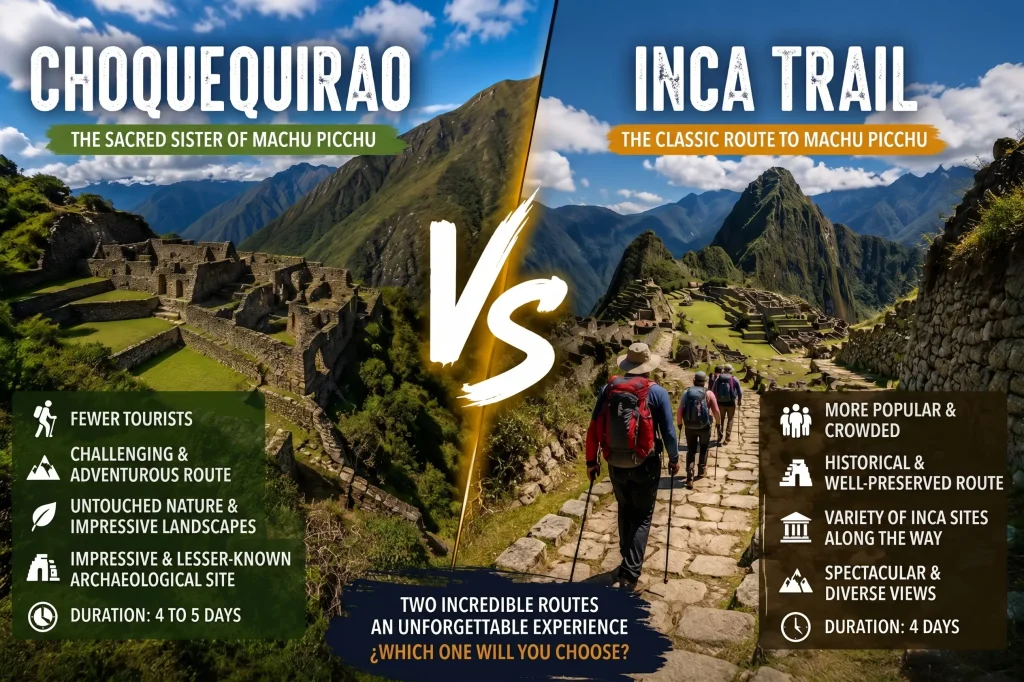
Choosing between Choquequirao or Inca Trail is a key decision for travelers in Cusco. Both routes feature Andean landscapes and Inca archaeological complexes. However, the experience on Choquequirao or Inca Trail varies in terms of physical demands, logistics, and visitor numbers. While the Inca Trail reaches Machu Picchu, Choquequirao offers a solitary and intense adventure. Therefore, assessing your physical condition, time, and budget is essential to making the right decision. In this comparative analysis, we will explore the key aspects to determine which route best suits your travel expectations in southern Peru.
Booking Inca Jungle can help you organize your ideal trek in Cusco.
Comparing Choquequirao and the Inca Trail in terms of logistics and reservations
Planning marks the first major difference between Choquequirao and the Inca Trail. The Inca Trail has a strict daily limit regulated by the Ministry of Culture of Peru. For this reason, tickets for the Inca Trail sell out months in advance. In contrast, the free Choquequirao or Inca Trail route does not require permits months in advance. Admission tickets for Choquequirao can be purchased at the archaeological site or in Cachora. In addition, hiring an agency is mandatory for the classic Inca Trail. On the other hand, for the Choquequirao or Inca Trail hike, travelers can go independently or hire guides in San Pedro de Cachora.
Availability of permits and access regulations
Access is a determining factor in any Choquequirao or Inca Trail trekking experience in Cusco. The permit for the traditional Inca Trail includes support staff. For this reason, the five hundred daily permits are divided between workers and tourists. Consequently, only around two hundred hikers enter the trail each day. In contrast, the Choquequirao option remains open year-round with no maximum number of permits. However, it is recommended to avoid the rainy season between January and March.
Transportation logistics and services along the route
Services vary depending on the chosen Choquequirao vs. Inca Trail route. The logistics of the Inca Trail are organized with designated campsites, restrooms, and regulated infrastructure. In addition, trains from Aguas Calientes to Ollantaytambo make the return to Cusco easier. On the other hand, logistics for Choquequirao require ground transportation to Abancay or a detour to Cachora. Likewise, muleteers and mules transport heavy equipment during the ascent and descent through the canyon.
Booking Inca Jungle offers logistical support for your adventures in the Andes.
Physical demands and terrain profile on both routes
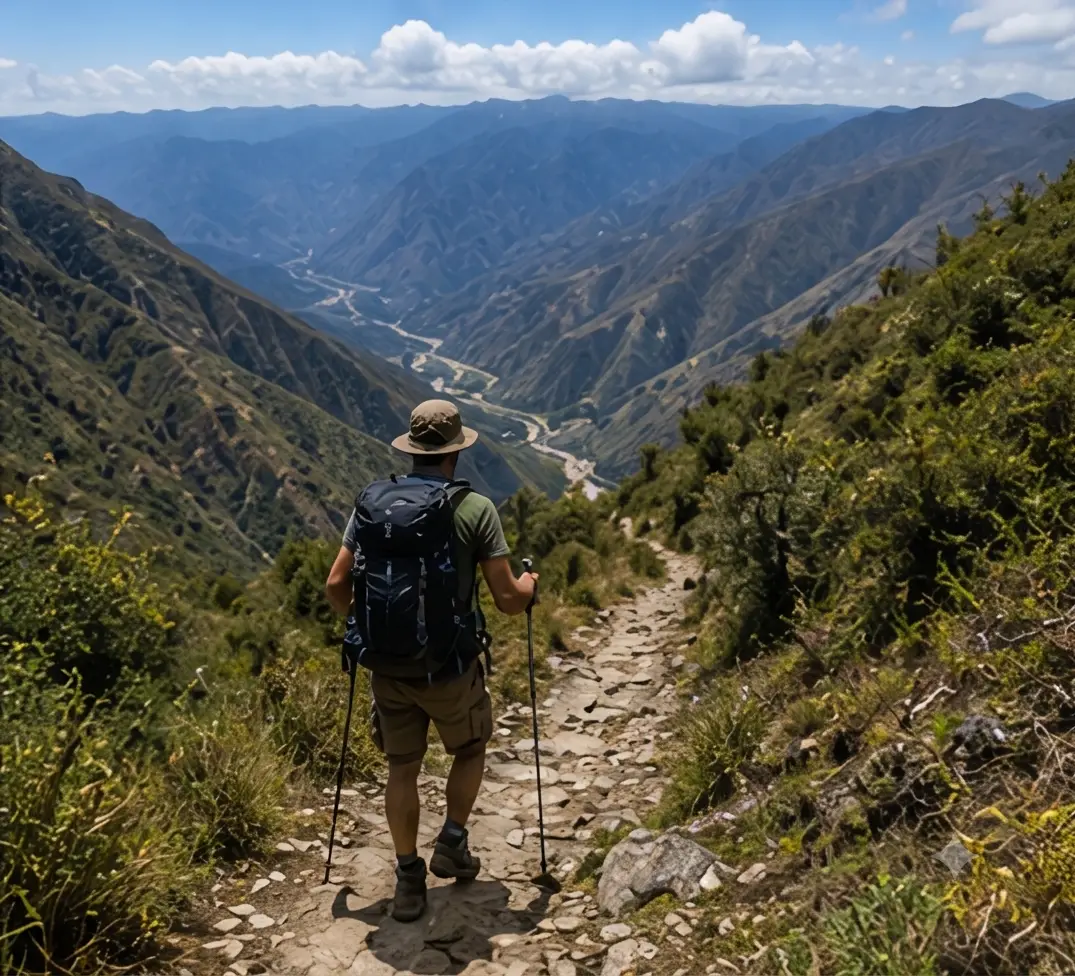
Physical fitness is crucial when choosing between Choquequirao and the Inca Trail. The Choquequirao vs. Inca Trail trek shows a clear disparity in cumulative elevation gains and difficulty. However the hike to Choquequirao is considered harder and more intense than the traditional Inca Trail. The route to Choquequirao involves descending into the Apurímac River canyon and then making a steep ascent. Therefore, the joints experience greater impact during the hiking days.
Altitude and elevation changes on the Inca Trail
The Inca Trail reaches high-altitude points that require prior acclimatization in Cusco. The Warmiwañusqa or Dead Woman’s Pass is located at 4,215 meters above sea level. Because of this elevation, altitude sickness is a potential risk during the first few days. However, the Inca Trail paths feature well-preserved stone stairways dating back to the imperial era.
Topographical challenges on the way to Choquequirao
The route to Choquequirao does not reach altitudes as high as the Inca Trail, reaching a maximum of 3,050 meters. However, the muscular effort is greater due to the significant topographical elevation change. Hikers must descend nearly 1,500 meters in a single day to Playa Rosalina. Subsequently, they must climb the same vertical distance toward Marampata in a warm climate. Consequently, this challenge makes this route a better Choquequirao or Inca Trail trek for well-prepared hikers.
Archaeological attractions and natural landscapes
The historical value is immense in any Choquequirao vs. Inca Trail experience. Both Choquequirao and Inca Trail trekking routes cross various ecological zones, from the highlands to the cloud forest. In addition, the Inca constructions along both trails demonstrate advanced architectural knowledge. However, the way travelers interact with the ruins differs due to the number of people on the trail.
Booking Inca Jungle organizes experiences to discover Inca heritage in a special way.
Archaeological complexes along the Inca Trail
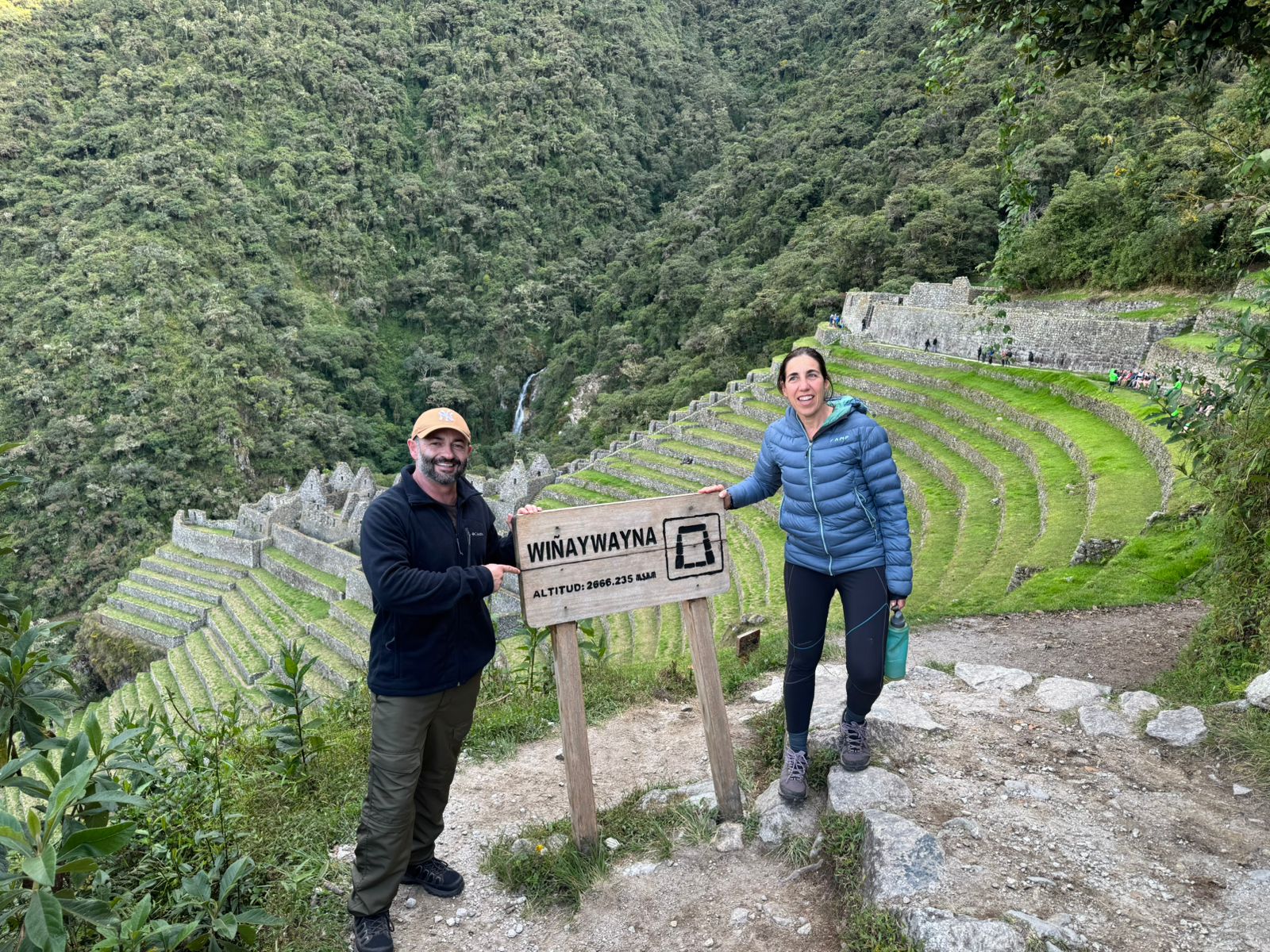
The classic route features numerous archaeological sites distributed along the trail. Hikers visit places such as Patarallacta, Runkurakay, Sayacmarca, Phuyupatamarca, and Wiñay Wayna. Finally, the group enters the citadel of Machu Picchu through Inti Punku. This sunrise arrival represents one of the greatest attractions of the traditional Inca Trail.
The mystery of the Choquequirao ruins
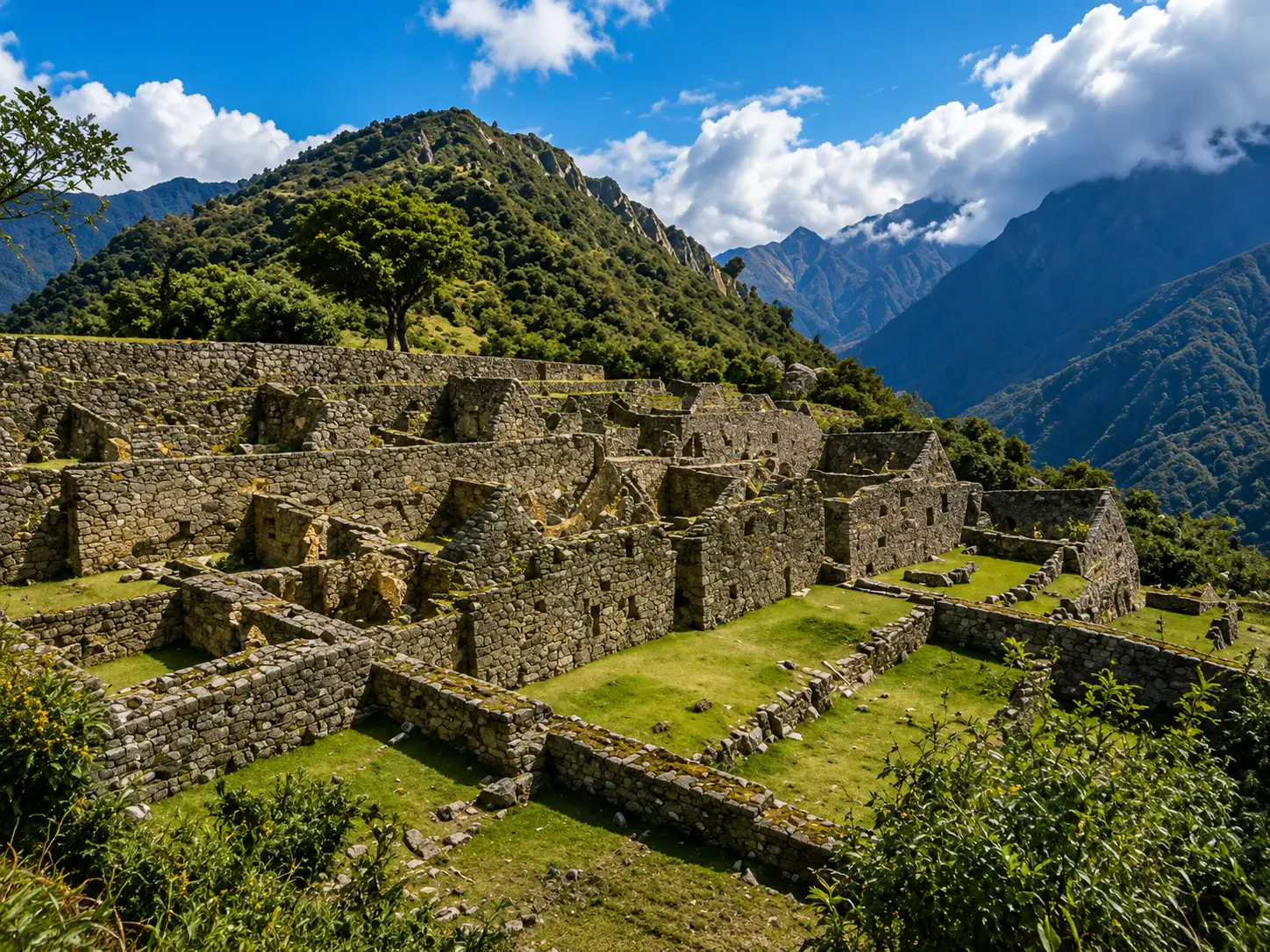
The site of Choquequirao is known as the sacred sister of Machu Picchu. Currently, only a small portion of the site has been excavated. The terraces of the Llamas of the Sun stand out for their white stone inlays. In addition, the absence of crowds allows visitors to explore the urban sectors peacefully. Therefore, many travelers consider the sense of discovery at Choquequirao to be unparalleled.
Tourist numbers and atmosphere during the hike
Crowds or solitude define the atmosphere along the Choquequirao or Inca Trail route. The number of people on the trail changes the hiker’s experience. While one trail encourages social interaction, the other offers an intimate connection with nature.
Shared experience on the Inca Trail
The Inca Trail is a social route where travelers from around the world come together. Campsites host groups that share experiences at the end of the afternoon. However, the presence of other hikers reduces the sense of wilderness isolation to some extent. Nevertheless, the professional organization of agencies guarantees exceptional comfort in the mountains.
Isolation and tranquility in Choquequirao
The Choquequirao or Inca Trail alternatives find their greatest differentiator here for those who love tranquility. On the route to Choquequirao, it is common to walk for hours without crossing paths with other groups. The campsites in Santa Rosa or Marampata are small and peaceful. As a result, this isolation makes the route an ideal Choquequirao vs. Inca Trail experience for disconnecting from everyday life.
Costs and travel budget
Budget is another key factor when deciding which Inca Trail or Choquequirao route to take. Prices vary depending on logistics, government permits, and included services.
Financial investment for the Inca Trail
Doing the Inca Trail involves a high financial investment due to official regulations. Entrance tickets, support equipment, and trains increase the overall cost. Formal tour packages tend to be expensive, reflecting the complexity of the logistics.
Estimated budget for the hike to Choquequirao
In contrast, the expedition to Choquequirao is more affordable for independent or budget-conscious travelers. Since there are no transportation monopolies or high entrance taxes, transportation and food costs are low. Even when hiring local guides and mules in Cachora, the final expense remains lower than that of the Inca Trail.
Time required and duration of the route
The number of days required determines the feasibility of including Choquequirao or the Inca Trail in your itinerary. The time invested includes the hike and the ground transfers before and after the trek.
-
Classic Inca Trail duration: The standard route is completed in four days and three nights, ending at Machu Picchu. There is a short two-day version that omits the higher sections.
-
Duration of the route to Choquequirao: The ideal hike requires four days and three nights, dedicating an entire day to the ruins. There are extended five-day variations to explore the complex in greater depth or continue to Espíritu Pampa.
-
Prior acclimatization time: For both routes, it is necessary to stay at least two days beforehand in Cusco or the Sacred Valley of the Incas to allow the body to adjust to the altitude.
Booking Inca Jungle can help you plan combined routes through the Andes, contact us.
Frequently asked questions
Is it possible to hike to Choquequirao without a hired guide?
Yes, it is completely legal to hike the route to Choquequirao independently. The trail from the town of Cachora to the ruins is well marked, and it is difficult to get lost along the way. However, excellent physical preparation, an updated topographic map, and complete camping equipment are required. It is also highly recommended to rent mules and hire local muleteers at the starting point so you do not have to carry all the weight of your luggage on the steep uphill sections.
What is the best time of year to hike the Inca Trail or Choquequirao?
The best time to hike either of these two trails is during the dry season in the Peruvian highlands, which runs from May to October. During these months, rainfall is very scarce, the skies remain clear, and the trails are dry, making safe travel easier. It is worth noting that during February, the Inca Trail remains completely closed for environmental maintenance and the conservation of the stone road infrastructure by government order.
Can Choquequirao and Machu Picchu be connected in a single trek?
Yes, there is a famous long-distance hiking route that connects the complex of Choquequirao with the mythical citadel of Machu Picchu. This combined expedition generally lasts between seven and nine days of intense hiking. The route crosses the Vilcabamba mountain range, passes through the town of Yanama, and connects with the Salkantay Valley. It is an extremely demanding route reserved for hikers with excellent physical fitness and previous high-altitude mountain experience.
What type of training is required before these hikes?
It is recommended to begin cardiovascular endurance training at least two months before undertaking the expedition in the Andes. Exercises such as running, swimming, cycling, or climbing stairs with weight help strengthen the legs and respiratory system. In addition, it is crucial to do practice hikes in the mountains while carrying a backpack with the estimated weight. Muscular preparation of the quadriceps and calves is essential to withstand the extensive descents and ascents of the Andean terrain.
What personal equipment is essential to carry in a mountain backpack?
Essential equipment includes waterproof hiking boots with good traction, thermal layered clothing, a waterproof jacket or rain poncho, and trekking poles with rubber tips. It is also mandatory to carry a sleeping bag suitable for below-freezing temperatures, a headlamp with spare batteries, broad-spectrum sunscreen, and strong insect repellent for the lower areas of the canyon. Finally, carrying water purification tablets and a reusable water bottle is vital during hiking days.