

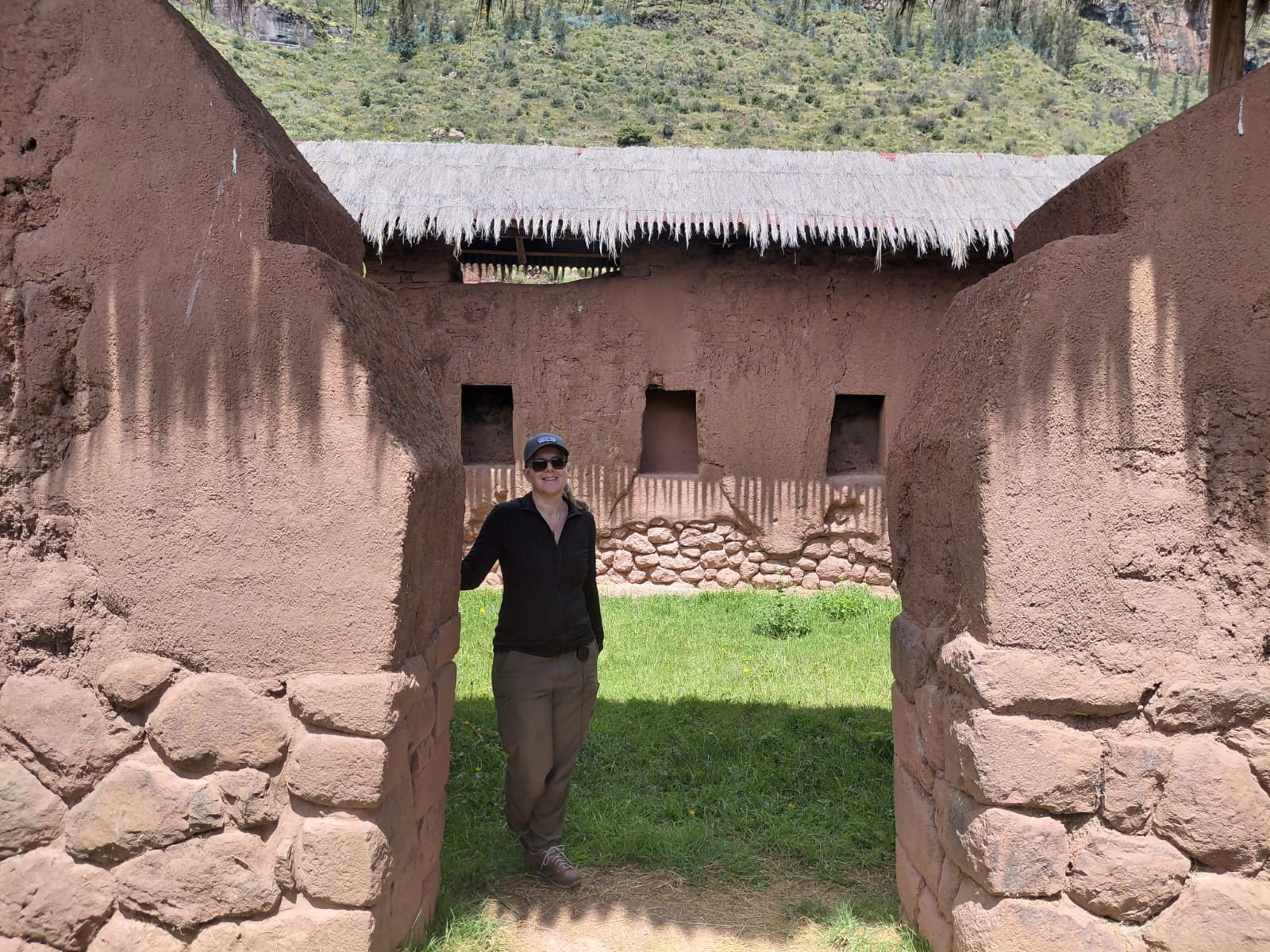
Huchuy Qosqo is one of the most interesting Inca settlements in the Sacred Valley of the Incas. Its name means “Little Cusco” in Quechua and has attracted the interest of researchers, hikers, and travelers for decades. Located on a plateau with broad views of the valley, this ancient administrative and residential center pr+eserves stone structures, agricultural terraces, and ceremonial spaces that help visitors better understand the organization of the Inca world. In addition, the growing popularity of a visit to Huchuy Qosqo has made the site an alternative for those who wish to explore places less crowded than other destinations in the region. Its strategic location, its connection with Inca nobility, and its impressive landscapes help explain why it received a name so closely linked to the ancient imperial capital.
History of Huchuy Qosqo and the Origin of Its Name
The history of Huchuy Qosqo is closely linked to the reign of the Inca ruler Viracocha, who governed before the rise of Pachacútec. Various studies indicate that the complex served as a royal residence and administrative center. Its location allowed control over important agricultural areas of the valley and supervision of communication routes connecting different regions of the empire.
The current name comes from Quechua. The word “huchuy” means small, while “qosqo” means Cusco. Although there is no Inca document that directly explains the exact origin of this designation, many specialists believe that the site had urban and administrative characteristics that resembled the imperial capital. Therefore, the local population eventually associated it with a smaller version of the main city.
During the colonial period, the site underwent important changes. However, much of its construction remained standing thanks to the quality of Inca engineering. Today, Huchuy Qosqo is part of Peru’s archaeological heritage and receives visitors interested in Andean culture.
Strategic Location Within the Sacred Valley
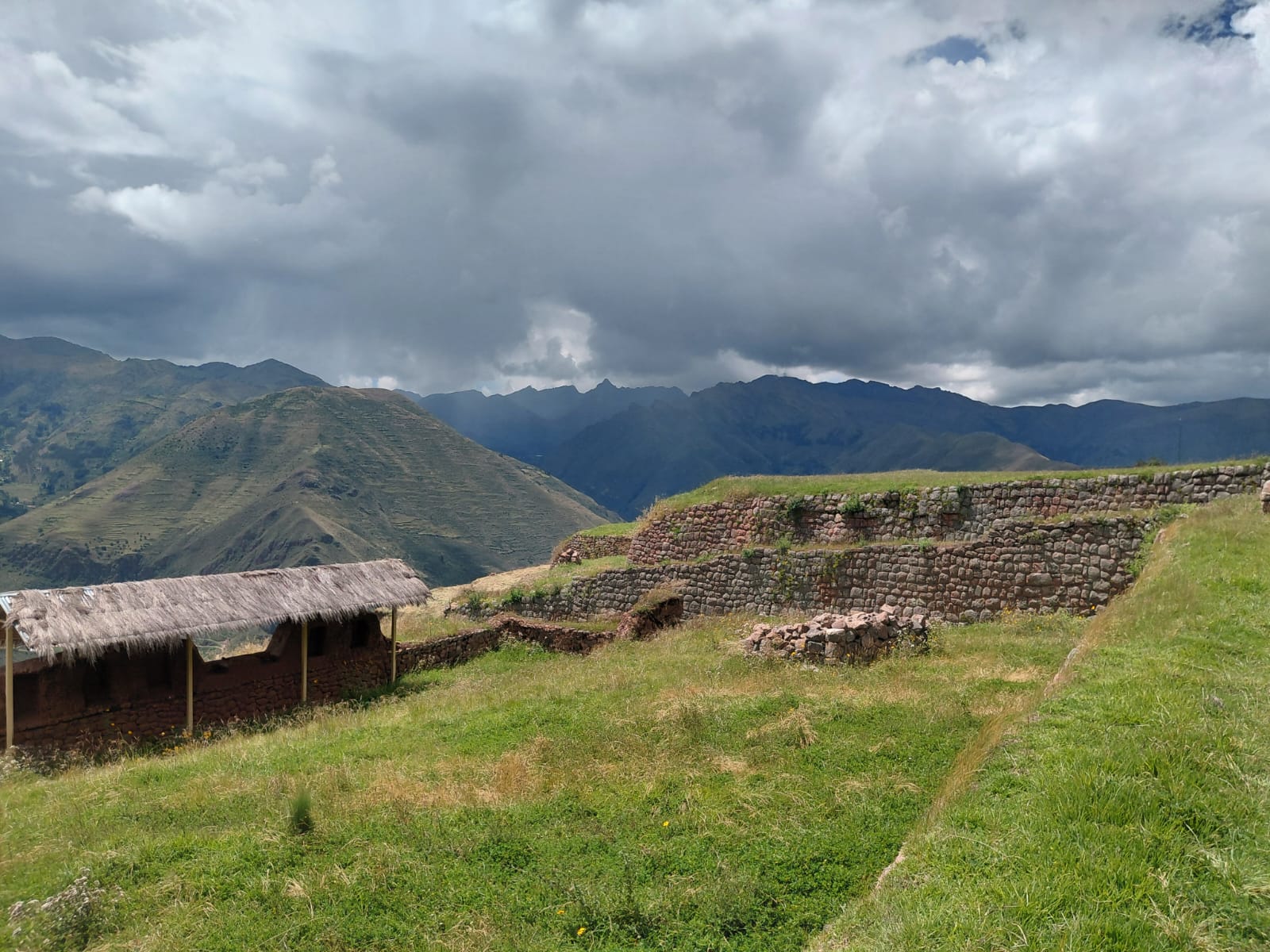
The location of Huchuy Qosqo helps explain its importance within the Inca territorial organization. The complex is situated more than 11,500 feet above sea level on a natural platform that overlooks large sections of the valley.
From this point, visitors can observe agricultural sectors, traditional villages, and natural routes used since pre-Hispanic times. In addition, the elevated position offered defensive advantages and allowed surveillance of movements throughout the territory.
The proximity to present-day communities such as Lamay makes access easier for visitors. However, the surrounding environment maintains a rural and peaceful atmosphere. This combination allows travelers to enjoy Andean landscapes while exploring historic structures.
Many travelers consider the Sacred Valley viewpoints found in the area to be one of the main highlights of the experience. From different sections of the complex, visitors can enjoy panoramic views of the Urubamba River, the surrounding mountains, and the agricultural terraces that characterize this region of Peru.
The Huchuy Qosqo Archaeological Complex and Its Role in the Inca World
The Huchuy Qosqo archaeological complex features architectural elements that reflect different functions within Inca society. Archaeologists have identified residential sectors, storage areas, ceremonial spaces, and extensive agricultural terraces.
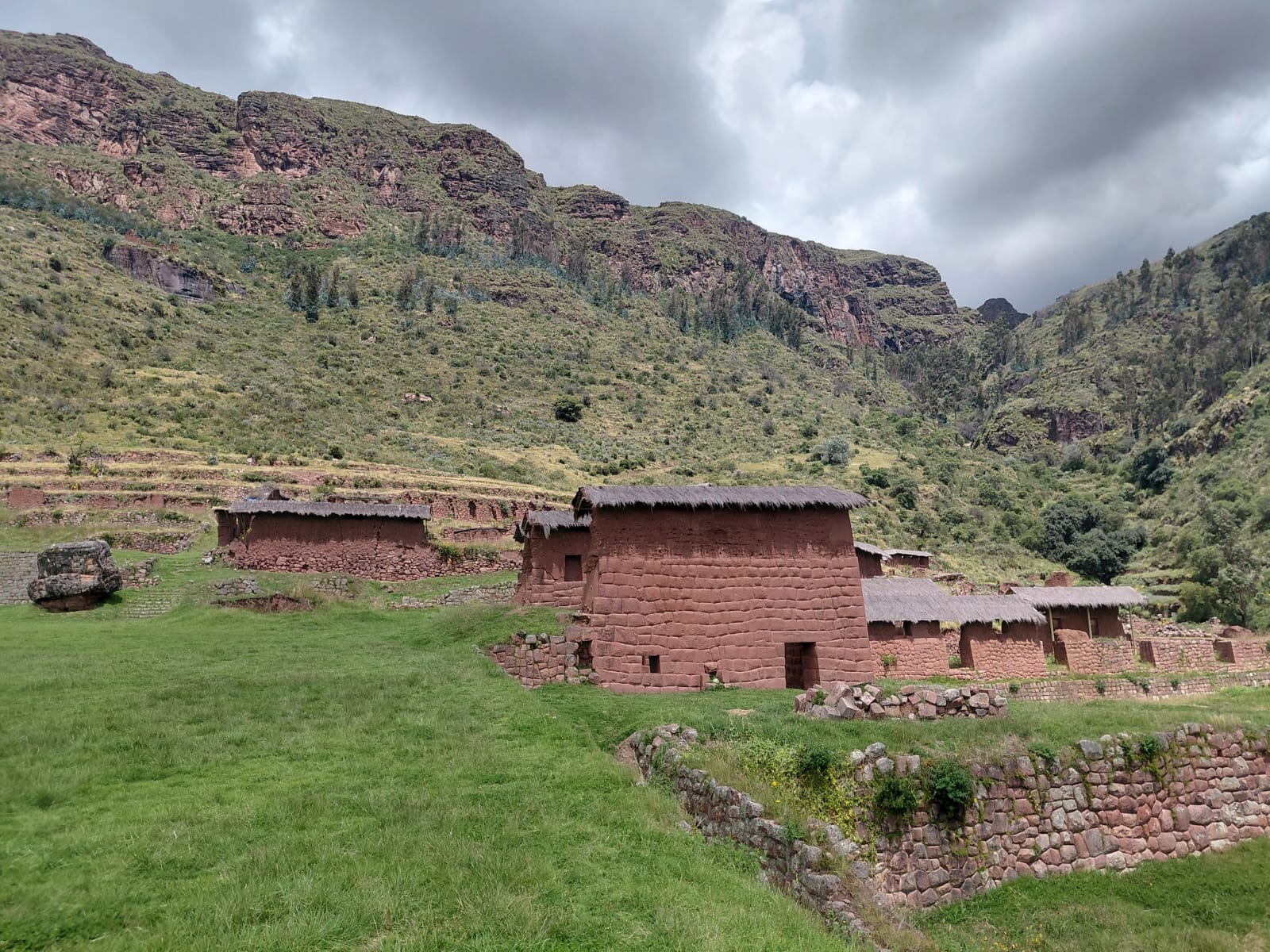
One of the most notable structures is a building constructed with stone and adobe. This type of architectural combination demonstrates the Incas’ ability to adapt to available resources. In addition, several structures preserve trapezoidal niches and details characteristic of imperial engineering.
The layout of the spaces suggests careful planning. Different sectors were connected by internal pathways that facilitated the movement of people and goods. Therefore, the site did not function solely as a temporary residence.
Among the most important elements of the complex are:
- Administrative buildings.
- Residential enclosures.
- Storage facilities.
- Agricultural terraces.
- Ceremonial spaces.
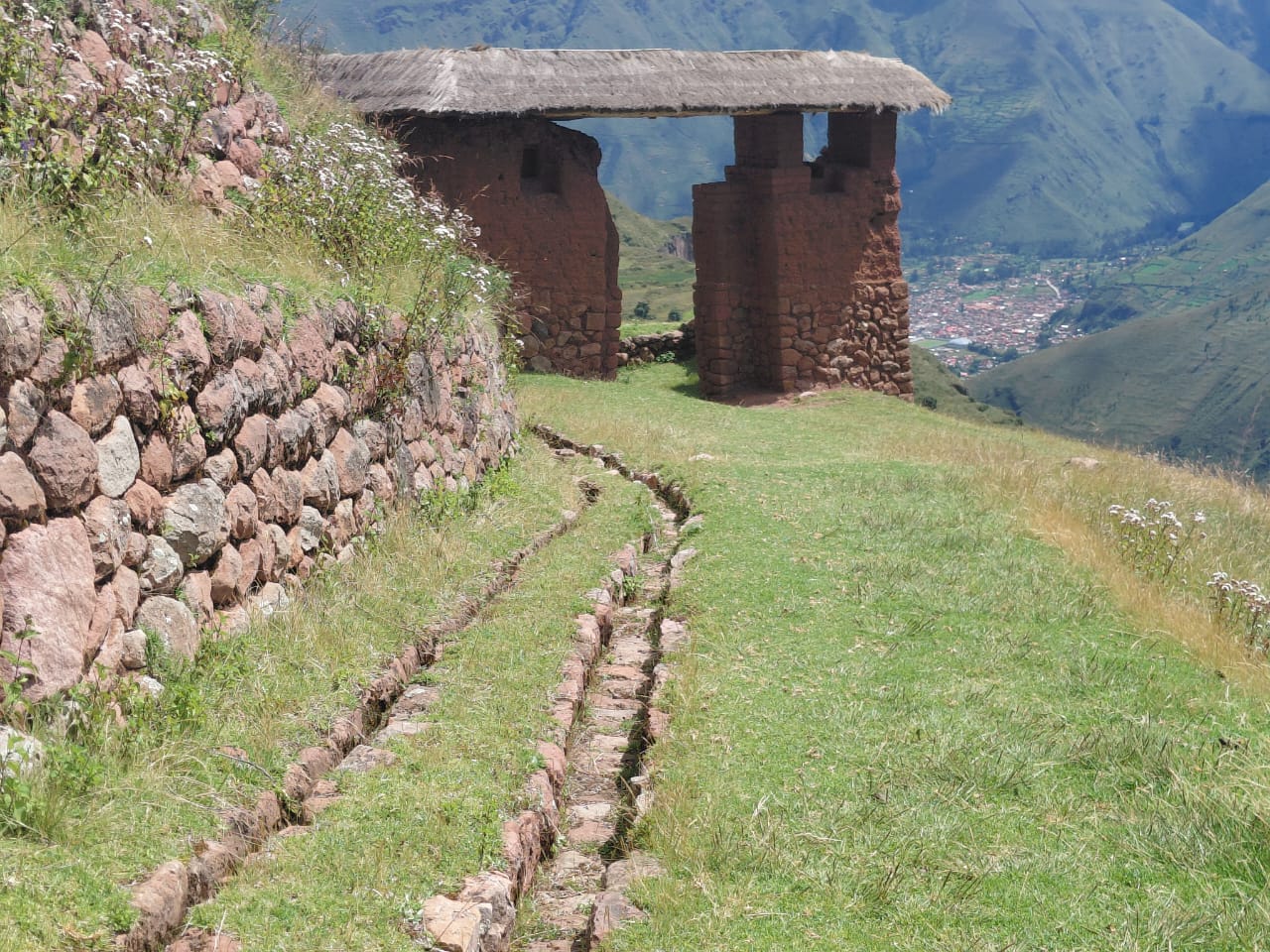
- Water distribution channels.
The presence of these structures reinforces the idea that Huchuy Qosqo played an important role in the regional administration of the empire.

Inca Architecture in Peru Reflected in Huchuy Qosqo
Inca architecture in Peru is recognized for its construction precision and for integrating buildings with the natural environment. In Huchuy Qosqo, visitors can observe several examples of these characteristics.
The agricultural terraces demonstrate advanced knowledge of hydraulic engineering. These platforms helped control soil erosion and made better use of local climate conditions. In addition, they supported food production for local communities.
The stone walls display construction techniques developed over centuries. Although some sectors show later restoration work, much of the architecture preserves original features. This allows visitors to appreciate the skill of Inca builders.
Another important aspect is the orientation of certain structures. Many were designed while considering environmental and topographic factors. As a result, the buildings blend naturally with the mountains and terrain variations.
The combination of functionality, durability, and adaptation to the landscape makes Huchuy Qosqo an excellent example of architecture developed by the Incas.
Trekking to Huchuy Qosqo and Access Routes
Trekking to Huchuy Qosqo has become one of the favorite activities for travelers seeking different experiences in the Cusco region. There are several routes to reach the complex, each with unique characteristics.
The best-known option begins near Tambomachay, on the outskirts of Cusco. This route crosses high Andean landscapes, lagoons, and rural communities before descending toward the archaeological site. The journey is usually completed in one day.
Another alternative is to access the site from Lamay, located in the Sacred Valley. This route involves a steady climb but requires less time than the route from the highlands near Cusco.
The Huchuy Qosqo hiking route offers advantages for different types of travelers. Some visitors prefer to complete the trek independently. However, many choose guided services to gain historical and cultural insights during the hike.
Before beginning any route, it is recommended to consider:
- Your level of altitude acclimatization.
- Weather conditions.
- Water availability.
- Proper footwear.
- Sun protection.
These measures help travelers enjoy the experience and reduce potential difficulties during the hike.
Huchuy Qosqo Tour and Day Trip from Cusco
The availability of a Huchuy Qosqo tour has grown in recent years due to interest from domestic and international travelers. Many tour operators include transportation, professional guides, and logistical support throughout the excursion.
A day trip from Cusco allows visitors to explore the complex within a single day. This option is convenient for travelers with limited time. In addition, it provides the opportunity to combine the experience with other nearby destinations in the Sacred Valley.
Organized tours typically include explanations about local history, the purpose of the structures, and traditions that remain alive in nearby communities. Therefore, visitors gain a broader understanding of the cultural context.
Among the main benefits of booking a tour are:
- Transportation arrangements.
- Specialized historical information.
- Greater safety during the hike.
- Efficient use of available time.
- Logistical support in case of emergencies.
These features have made Huchuy Qosqo an increasingly popular option within cultural tourism in Cusco.
Inca Heritage of the Sacred Valley and Cultural Significance
The Inca heritage of the Sacred Valley includes numerous ceremonial, agricultural, and administrative centers. Within this group, Huchuy Qosqo holds an important position due to its state of preservation and historical relevance.
The site helps visitors understand fundamental aspects of the empire’s political and economic organization. In addition, it demonstrates the relationship between ruling elites and the valley’s agricultural resources.
Archaeological research continues to provide new information about the function of the complex. Thanks to these studies, it is possible to reconstruct part of the daily life of those who inhabited the region centuries ago.
The preservation of the site also benefits nearby communities. Tourism development creates economic opportunities related to guiding services, transportation, and local gastronomy. However, heritage protection remains a priority to ensure the conservation of existing structures.
Archaeological Tourism in Cusco and Cultural Experiences
Archaeological tourism in Cusco often focuses on widely known sites. However, Huchuy Qosqo offers a different experience thanks to its lower visitor numbers and natural surroundings.
The combination of history, archaeology, and hiking allows travelers to enjoy a complete activity. In addition, many visitors appreciate the opportunity to walk along traditional paths used for centuries by Andean populations.
The experience also encourages interaction with local communities. During some tours, visitors can observe traditional agricultural practices and learn about aspects of contemporary Quechua culture.
Furthermore, the natural environment enriches the visit. Mountain landscapes, agricultural terraces, and panoramic views provide an ideal setting for understanding the relationship between the Incas and their territory.
Things to See in Huchuy Qosqo During Your Visit
When planning a visit to Huchuy Qosqo, it is useful to know the main points of interest within the complex. Each sector contributes different information about the history and operation of the settlement.
Among the most notable features are:
- Large agricultural terraces.
- Finely crafted stone structures.
- Adobe-walled buildings.
- Hydraulic channels.
- Ceremonial spaces.
- Panoramic views of the Sacred Valley.
In addition, many visitors enjoy the natural environment surrounding the complex. The mountains and agricultural fields create a landscape characteristic of the Peruvian Andes.
Photography opportunities are also abundant. During the early morning and late afternoon, conditions are favorable for capturing images of both the site and the surrounding scenery.
The variety of attractions makes Huchuy Qosqo a suitable destination for history enthusiasts as well as hiking lovers.
Inca Ruins in Cusco and the Uniqueness of Huchuy Qosqo
The Inca ruins in Cusco include some of the most important archaeological complexes in South America. However, Huchuy Qosqo stands out for several distinctive characteristics.
Its elevated location provides a different perspective of the territory. In addition, access through hiking routes adds an adventurous element that is not always present at other archaeological sites.
Another distinguishing factor is the sense of tranquility. Although the site receives visitors throughout the year, attendance is generally lower than at other famous destinations in the region. This allows travelers to explore the structures at a more relaxed pace.
The combination of historical value, Andean landscapes, and relative accessibility has helped strengthen the reputation of Huchuy Qosqo within Peruvian cultural tourism. Therefore, it continues to attract travelers interested in discovering lesser-known aspects of Inca civilization.
Frequently Asked Questions
1. What Is the Best Time to Visit Huchuy Qosqo?
The dry season, between May and September, usually offers better conditions for hiking and enjoying clear views. During these months, rainfall is less frequent and trails are generally in better condition. However, there is also a higher number of visitors. The rainy season may provide greener landscapes, although some routes can become more challenging due to mud and moisture.
2. How Long Does a Complete Visit to Huchuy Qosqo Take?
The duration depends on the route selected. A trip from Lamay may require half a day, including the ascent, visit, and return. In contrast, the hike from Tambomachay generally takes a full day. Organized tours usually allocate enough time to explore the main structures and enjoy the panoramic views.
3. Is It Necessary to Hire a Guide to Enter the Site?
It is not always mandatory, but having a guide significantly improves the experience. A professional can explain the purpose of the structures, the historical context, and the archaeological research conducted at the site. In addition, guides help visitors interpret details that might otherwise go unnoticed during an independent visit.
4. What Is the Difficulty Level of the Trek to Huchuy Qosqo?
The difficulty varies according to the selected route. Some hikes include long ascents and sections located at high altitude. For this reason, proper acclimatization is recommended before beginning the trek. People with basic hiking experience usually complete the route without major problems when maintaining a steady pace.
5. What Items Should You Bring During the Excursion?
It is recommended to bring sufficient water, sunscreen, a hat, clothing suitable for changing temperatures, and hiking shoes. Energy snacks and a waterproof jacket are also useful. Weather conditions can change quickly in Andean regions, so proper preparation improves comfort and safety throughout the experience.
Discover our travel packages to Peru and let us organize the perfect adventure for you. Request your quote for your trip to Cusco today!